Feeds:
Posts
Comments

Archive for the ‘on liberal education’ Category

Lincoln and Generals

Abraham Lincoln y la esclavitud, Response to “El Tiempo” columns 5: Comentario a Daniel Samper Pizano “Lincoln, un racista lleno de gloria”, enero 6 de 2009.

(Nota: Para otro texto sobre “Lincoln y su uso de la retórica  política” escrito en inglés ver aquí )

Sin duda el hecho de que su columna haya sido respondida a partir de citas textuales de la obra de Lincoln no es gratuito. Esa decisión revela en sí misma una posición radicalmente diferenciada de la suya. Se podría defender dicha posición de diferentes maneras. Una de ellas podría argumentar lo siguiente: “si Lincoln mismo con sus propias palabras no puede defenderse de sus acusaciones altamante incompletas y cuestionables, pues menos lo haremos aquellos que no hemos logrado la grandeza que Lincoln sí alcanzó no sólo en actos sino en su admirable manera de escribir sobre y enfrentar decididamente y con gran coraje los complejos dilemas políticos de su época.” Pero además, dicha postura puede invitar a una relectura mucho más cuidadosa y hermeneúticamente mucho más generosa de la obra de Lincoln que la suya; sobretodo teniendo en cuenta que su obra es admirada por su originalidad reflexiva, por su socrática capacidad de autocuestionamiento  —evidente en las citas que le envié—— y por su poderoso manejo retórico del lenguaje público siguiendo el modelo de los Griegos Antiguos. En este sentido es de absoluta importancia el que las citas que usted provee sean claramente identificadas en cuanto al punto preciso de su aparición dentro de la amplia obra de Lincoln (es decir, cuál discurso, qué  año, qué circunstancias, ante cuál audiencia, y otros.)

O podríamos poner la cuestión de una manera más personal. Si bien leo con frecuencia sus columnas, en verdad es raro que su dinámica logre penetrar los fundamentos político-filosóficos que están a la base de mi vida académica y práctica. En verdad en su caso debo decir que llegamos a implementar aquello a que la democracia invita,  a la tolerancia de la diferencia (¡y qué diferencia tan difícil de tolerar!) Y a diferencia de otras ocasiones, en esta oportunidad decidí responder y hacerlo de una manera específica, simplemente citando “como buen loro” las palabras de Lincoln referidas especificamente a los temas tratados en su columna, especialmente la problemática compleja de la esclavitud. Imagino su respuesta ante tal posición algo así como lo siguiente: “Bueno, si hermano, pero ahora dígame usted qué piensa, o es que acaso idolatra a Lincoln?” Si estoy —–así sea tan solo medianamente—– en lo correcto, entonces tal vez las citas hayan tenido el efecto deseado. ¿En qué sentido? En el sentido paralelo siguiente;  al leer la columna sobre Lincoln y su respuesta lo único que yo podía pensar era; “Bueno, hemano, pero ahora dígame que era lo que Lincoln decía, o es que acaso sólo caricaturiza a Lincoln?” Y claro ante un personaje como Lincoln prefiero pecar de idólatra antes que de caricaturizador.

Más positivamente, veo en su columna un deseo por darle una voz a las grandes y complejas comunidades negras que no sólo en la historia de los Estados Unidos sino en nuestra propia Colombia han sido tratadas de manera condenable, antes como propiedad sin alma, ahora como supuestos ciudadanos pero tan sólo de segunda clase. Su riqueza cultural, musical y  política silenciada por muchas décadas. Pueda ser que las leyes hayan prohibido la escalvitud, pero la dinámica racista perdura entre nosotros de manera preocupante. Basta pensar en Martin Luther King, y el caso de dramático de la realidad chocoana en nuestro país. No en vano las lágrimas de muchos afro-americanos al darse cuenta que Obama en realidad sí había sido elegido; era como si no lo creyeran. En este sentido su postura interpretativa, que busca un espacio real para la dignidad de la diferencia para ciertas minorías, es bienvenida y digna de defensa, aun cuando el tono y la argumentación en muchos casos deja muchas dudas acerca de la consecución de dicho objetivo. Y claro, realizar semejantes proezas en una corta columa periodística involucra ya de entrada una gran injusticia de mi parte.

Habiendo dejado eso en claro, surgen ——creo yo, y perdonará la excesiva extensión de esta respuesta—— al menos tres críticas de gran  importancia a los puntos de vista brevemente expuestos en su columna: 1) cuestiones generales metodológico-interpretativas a la base de su visión de mundo, 2) cuestiones más específicas, particularmente referidas al contraste realmente problemático entre lo que dice el propio  Lincoln, confrontado a su interpretación —basada en un grupo de historiadores, más no en el único grupo (piénsese en la obra de Jaffa sobre Lincoln)—– acerca de lo que se dice que dice Lincoln,  y 3) los dilemas práctico-políticos concretos frente a la cuestión de lo público en Colombia que generan su postura casi que orgullosa de destrozar todo mito político relevante, ingenuamente al mismo tiempo aparentando defender la posibilidad de una vida política en la que los mitos sean dejados de lado por completo.  A continuación cada una de estas críticas:

1) Lo cierto es que las diferencias metodológicas/interpretativas a la base de nuestras aproximaciones a la historia de lo político, y sobretodo de los grandes líderes políticos son abismales. Y estas diferencias metodológicas/interpretativas hacen inevitable que veamos dos mundos esencialmente opuestos. Envié la cita porque en cuanto a Lincoln y sus posturas frente a la igualdad racial es mejor leer lo que él mismo asevera.  Como hace mucho sigo sus columnas —es raro que este de acuerdo con alguna de ellas—- puedo decir que comprendo varios de sus puntos de partida como periodista. Interpretativamente existe la idea de que los llamados “hombres/mujeres de estado’ son: a) simples estrategas en búsqueda de aquello que conviene más a su deseo por poder que cualquier causa noble/honorable; b) sus palabras en general sólo reflejan aquellas motivaciones inconscientes que ellos no pueden nunca llegar a superar; c) recurren a cualquier medio para obtener su fin que esta lejos de la nobleza y honorabilidad de lo político. Ahora bien, un resumen de la postura radicalmente crítica de sus presuposiciones se  encuentra —entre otras—- en la obra de Thomas Pangle que argumenta que por el contrario hay una tradición que restaura el civismo ejemplar de los grandes “seres de estado” a su correcta posición. No en vano esta tradición mira atrás, a la filosofía politica clásica griega (sobretodo Aristóteles), como su guía. Disculpará que no la traduzca;

The rebirth of classical republican theory restores civic statesmanship to its princely throne as the highest subphilosophic human calling. And Strauss’s teaching instills a tempered appreciation for the nobility  of the political life within liberal democracy  as the best regime  possible in our epoch, in full awareness of this democracy’s and that epoch’s intensifying spiritual and civic conundrums. Strauss’s thought carries an implicit as well as explicit severe rebuke of those thoughtlessly egalitarian historians and social scientists who debunk, rather than make more intelligible and vivid, the greatness of statesmen. Strauss deplores and opposes the prevalent scholarly tendency to belittle or ignore political history  for the sake of subpolitical “social” history —to reduce the debates and deeds of active citizens and their leaders to merely “ideological” contests masking supposedly deeper economic or “social” forces. He argues that these fashionable scholarly and teaching trends not only undermine the already precarious respect for political debate and public spirit, but also falsify the empirical reality of man as the political animal.” (mi énfasis; Thomas Pangle, Leo Strauss: An Introduction to his Thought and Intellectual Legacy,  p. 82)

Tal vez reconociendo la diferencia –que es algo a lo que usted invita—- modere así sea un poco la manera en que se aproxima a los grandes líderes políticos que desde el ámbito de lo político son admirados por su nobleza y que desde el llamado “cuarto poder” (la prensa libre) son constantemente cuestionados utlizando un lenguaje foráneo, muchas veces indignado y sin duda interpretativamente limitado. ¿Acaso no está en el “cuarto poder”  el poder —–y sobretodo el DEBER—– de generar, o ayudar a generar las condiciones de estabilidad política y generación de líderes y de una ciudadanía fuerte que garantice que la democracia logre sus objetivos de la mejor manera posible?  O como lo dijo Bolívar, otro gran hombre de estado relevante para nuestra encrucijada colombiana:

“Un hombre como yo, es un ciudadano peligroso en un Gobierno popular; es una amenaza inmediata a la soberanía nacional. Yo quiero ser ciudadano, para ser libre y para que todos lo sean. Prefiero el título de ciudadano al de Libertador, porque este emana de la guerra, aquel emana de la leyes. Cambiadme, señor , todos mis dictados por el de buen ciudadano.
(Discurso al Juramentarse como Presidente de la República ante el Congreso, Cúcuta, 1821; Brevario del Libertador, Ramón de Zubiria p. 172)

Y por ende surgen muchas preguntas frente al sarcasmo de su columna, incluyendo: ¿cómo generar dichos ciudadanos si nos mofamos de los líderes que son precisamente los más ejemplares ciudadanos a nuestro alcance? (more…)

Read Full Post »

Horses 1

Some time has passed since my father’s untimely death. Since then an epitaph has been chosen to be placed near his resting place deep inside a uniquely beautiful natural area within the Andean mountains of our dear Colombia. Surrounded by the nature he loved, he will surely rest in peace. The epitaph chosen, translated into English reads something like this: ”We will always have you in our hearts.” My mother, who spent most of her life beside him even when separated, approved those words. This alone speaks of their great importance.

Although this is quite a nice and simple epitaph, and in fact shows the importance of remembering the love one carries within for those who depart, I think it has some limitations. Perhaps by looking at its limitations we can become more aware of what an epitaph is for and what are the hidden possibilities within for diverse epitaphs. Maybe then we will be better prepared to engage in the reflective process which is behind the selection of those epitaphs with which we will honor the passing through life of those close to us. Perhaps it will even allow us to set out what epitaph will appear above our very own gravestones someday.

The three limitations to this epitaph are as follows: 1. it speaks more of “us” than the person who has died, namely, our father (it says “we” and “our hearts”, instead of “him” and “his heart”); 2. it is the kind of epitaph that could be placed in many tombs, so that the particularity and uniqueness of my father (and he was quite unique, I tell you!) is quite lost, and finally, 3. it tries to convince us that the aim of an epitaph is to touch our emotions primarily and only secondarily our capacity for reflection and creative imagination which are among the highest faculties we possess as human beings. In contrast, I think an epitaph should: 1. speak primarily about the person him/herself who has died, 2. reveal him or her in a special light using the expressive power of language, and finally, 3. should not primarily focus on the emotions, specially if these have not been articulated in the life of the members of these families, but should point towards reflection and the need we have of such reflection in order to guarantee a certain true and honest legacy of the person who has died. How could one come up with such an epitaph?

First off, by looking at the many famous ones which many others have used to remind us of those who were found to be memorable. One can in turn try to relate some of them to the close loved person who has died. In the case of my father two such realms come to mind. On the one hand, the serious type of epitaphs which are usually used for those who have dedicated their lives to the political or public life. The single most famous example of this type of epitaph can be seen in the words found at Thermopylae, words recently beautifully and powerfully recovered in the movie the 300:

“Go tell the Spartans, stranger passing by
that here, obedient to their law, we lie.”

At the very least these soldiers asked of their kin not to forget the sacrifice they endured in order to try to secure the lawful freedom of those intimately close they left behind. Another such powerful example of an epitaph that in its simplicity touches us like few can, is the one found at the “Tomb of the Unknown Soldier”. It reads: “Here Rests In Honored Glory An American Soldier Known But To God.” Its power lies precisely in that usually we bury those who are known to us, here the words remind us that many die in anonymity. This epitaph stands against the injustice of such anonymous deaths.

A second realm which could apply to my father would be a more ironic and fun-spirited one. Usually it is artists who have the strength to come up with such kinds of epitaphs. Given my father’s unique sense of humor, one could eventually think of an epitaph such as one which Hemingway once proposed and which reads:

“Pardon me for not getting up”

My father would have laughed.

In this respect, by letting ourselves be touched by what others have decided to lay down as their final resting words ——those few limited marks which will attempt to break us free from our mortal demise and now obvious finitude—— we would be more able to decide which words to choose for those we love and even for ourselves upon, better yet, before (!) our departure. (more…)

Read Full Post »

This content is password-protected. To view it, please enter the password below.

Read Full Post »

This content is password-protected. To view it, please enter the password below.

Read Full Post »

(Note: JUST IN CASE, FOR AN IDENTICAL PRESENTATION WHICH INCLUDES SOME PHOTOS, PLEASE SEE THE FOLLOWING: link )

On Radical Linearism.

Those of you who have seen my simple drawings have done me great good. Their simplicity is shocking, specially to me. I mean, are they really complete works? Surely I must be kidding, right? Surely they are just simple nice sketches which will be reworked finally to really produce a painting. Surely it might even seem a bit arrogant to frame such few lines and pretend they are a finished works. In a sense this is true, but in another quite false. This is why I write this journal; to clarify to myself and to some friends what might lie behind the appearance and decision to draw such lines. In this sense, this journal continues the ideas present in my previous Journal “Lines and Beauty” [link] . In it, I briefly spoke about my love of lines.

So I guess first one must say that these lines have risen out of great love of some painters in particular. They can only be understood in reference to Kandinsky, Klee, Mondrian, and Miró. I will provide examples of the first two to see what I mean:

1. Klee (drawings and paintings)

2. Kandinsky (drawings and paintings)

If it were not for my contact with these painters, I doubt I would have ever drawn what I have. This is so because “abstract impressionism” led me on a truly anti-representationalist path. As Klee wrote: “Art does not reproduce the visible; rather, it makes visible.” But these drawings are much more radical in their nature, hence the name “Radical Linearism”.

Have you ever stayed up late wondering about what your art shows? Have you ever had the need to express to yourself in words what lies behind your artistic decisions? Have you ever wondered after you submit here at DA, what is it you are doing? Well if you have felt this, then you will be open to this journal. But all this requires a bit of courage and the passage of time. Courage, because it is hard to defend a certain simplicity in our modern complex, technologically-oriented, world. And the passage of time, for I doubt a few years ago I could have even thought about writing this. Perhaps the preparation for my PhD thesis has allowed me to understand myself a bit more. And finally, there is always recourse to great artists and thinkers. As Da Vinci is said to have written:

“Simplicity is the ultimate sophistication”
[link]

Obviously this cannot mean that Da Vinci was a simpleton! Simplicity is far from superficiality. Quite the contrary, simplicity may sometimes provide a radical critique of our supposed complexity; a complexity which may truly be hiding us from ourselves. In this sense, this journal is very Socratic ——remember Socrates preferred, for the most part, to go about without shoes— because it asks of us to try to know ourselves. Perhaps more journals such as these at DA can help us better understand ourselves as artists.

To the problem. You see, the problem with these drawings I did in the period 2000-2003 —–after having drawn for many years much more complex figures and paintings— is clearly that they seem to be the result of a childish inability to develop one’s ideas so as to produce a real complete work. To see what I mean just take a look at some of these radical linear drawings. You will see and feel what I mean:

“Human being”

“Linear Woman”

“Minimalist landscape”

“Peasant “

“Proyección”

“Linear Woman”

“Conversation over water”

“Mujer cuadriculada”

“Bird”

“Earth-tree-bird-moon”

“Peace towers 9/11”

“Beating Landscape”

“Embarked”

“Reading”

“Beso”

(and many others found in my Gallery; and still others which I have not submitted.)

The feeling some deviant commentators have had can be summarized as follows: “Really beautiful drawings and yet there is something lacking in them, a certain depth. They are cute and nice, but inconclusive. Surely there will come a point when you will have time to work on them.” So much have I heard this, that I even doubted whether to submit them at all, not to mention frame them as they are!

The defense. First of all I must repeat that, contrary to what one might believe, these drawings were done between 2000-2003, so that they belong to a much later date in my artistic production. Second, they arose suddenly as if of themselves. I had drawn extensively before, but these later drawings were quite unique and challenging. They seemed absolutely simple and yet I found myself with no desire whatsoever to modify them much! It is as if they told me not to modify them much.

To understand the issue at hand I must let you see for yourselves previous paintings and drawings which show the complexity which existed before the arrival of these radical lines:

1. Anthropomorphosis (1989-90) (A complex painting)

2. Temporality (A complex sketch from 1988)
:thumb13086058:

3. My house (A complex sketch from 1993)

4. Rezo (A complex drawing from 1988)

So you see, now you might understand why these later drawings puzzled me so much. And what is still worse is that previously I HAD IN FACT used some older drawings to create much more complex paintings. Such is the case of

1. “Coupling”

whose sketch was done in 1987

2. “Soaring Sunset”.

whose sketch was done in 1987 as well

This is very paradoxical to me. I had already created complex paintings from similar drawings when I was much younger. These paintings provided possible solutions for the immature sketches to try to become more complete works. The solution in “Coupling” seems to create much beauty, but makes the lines fall into the background almost completely. The solution with “Soaring sunset” —-–to expand the lines and color them— keeps the value of the lines, but requires the use of color.

And then I asked, what if these radical linear drawings were ends-in-themselves? What would that mean? How could I make myself clearer about this with multiple commentators arguing that these “nice” and “cute” little sketches were just sketches? I told myself that the only solution I could afford to accept was that of making them much larger then they are, simply widening the lines so that they would not seem as fragile as they do. But aside from that, no color or transformation in the lines. I started to worry I was loosing it. And then came DA, and luckily I had to think about these drawings thanks to the comments by several kind deviants to whom I am grateful.

Thinking it through, I came up with the idea of “Radical Linearism”; first as a nice title, but slowly as a more serious possibility for self-understanding. The part on “Linearism” is too obvious to even comment. But why is it radical and not merely another form of abstractionism? Because the emphasis lies in the lines themselves; and, as far as possible, in the least amount of lines that one can use to express oneself with regards to any given topic or subject.

And so AT LAST, the following 10 points are what I think might lie behind the simplicity of these lines. (Please check out my previous journals so you do not believe this is simply a crazy fluke.)

Radical Linearism: some working ideas

1. The simplicity of these lines stands as a powerful critique of modern complexity. Busying ourselves at all times, we may have truly lost ourselves. These lines therefore stand as a kind of therapy against complexity; they remind one of the need to stop and reconsider. In this sense, they defend another kind of complexity.

2. Their simplicity is fueled by an economic critique. Their economy of form and color is set up in contrast to a society which enjoys consuming endlessly (consuming even the greatest of art works). Their economy of means is set up against a world of radical economic inequalities. They put forward the possibility of having less as condition for creating more.

3. The simplicity of these lines points directly to our mortality. Mathematically, a line is made up of points; but a point –according to Euclid— is “that which has no part” [link] . They in fact arose soon after I was diagnosed with a severe illness which made it impossible for me to walk for over a year, and also made it quite difficult to draw. It hurt to draw, hence the need for few lines. Is this why they seem to have a certain therapeutic effect? Is their simplicity to be understood in part because, when one comes in touch with one’s mortality, one gets rid of the annoying superficial complexity of many irrelevant things?

4. Their simplicity opens them as true possibilities. They can be seen as the genetic structure for further projects; a kind of DNA which can generate multiple possibilities. They could allow, as sketches do, to be reworked in different directions under differing conditions. (Isn’t the DNA helix quite linear; not to mention the way we represent molecular bonds?). And yet they are completely finished unto themselves.

5. The simplicity of these lines has a direct connection to Primitivism. They recall the symbolism of lines which appeared in caves as some of the first expressions of our expressive possibilities as distinctly human.

[link]

6. Their simplicity can be seen as spiritual. They can be regarded both as a reduction towards the essentials of a given object, and simultaneously as an ascent to a certain kind of “Purification”. Forgive me, but here I must have recourse to truly great painters. As Klee wrote:

“Some will not recognize the truthfulness of my mirror. Let them remember that I am not here to reflect the surface… but must penetrate inside. My mirror probes down to the heart. I write words on the forehead and around the corners of the mouth. My human faces are truer than the real ones.” [link]

Or as Kandinsky famously wrote: “The contact of the acute angle of a triangle with a circle is no less powerful in effect than that of the finger of God with the finger of Adam in Michelangelo’s’ painting.” (p. 77 Kandinsky)

7. The simplicity of these lines opens us to the world in a radically new way. The minimalist group here in DA — ~minimalism —- provides wonderful examples of what this might mean. (I myself have tried to provide photographs in this direction in my gallery.) Your eye becomes unencumbered in an age in which complex images assault us at every instant.

8. Their simplicity has a particular historical and personal context as the Colombian citizen that I am. They stand as a contrasting balance to our famous and magnanimous Colombian painter and sculptor Fernando Botero and his well-known over-sizing:

9. The simplicity of these lines invites the spectator to become an engaged and activate participant who —if she/he is open enough— must be truly puzzled by their very simplicity: As I wrote in my previous journal on lines: “One tends to think that lines reduce. But lines actually make you produce an image that is nowhere to be found in the world. Lines make you activate your seeing and your thinking. For lines ask to be completed by you, the perceiver. At first you do not see it, so you must look closer and engage what seeing cannot. They are deceptive because they seem too childish to hide any depth. But if you can see some depth in them, then —just maybe—- you really surprise yourself and therefore start to see lines all around you in the world. Of course, I rarely succeed in doing this, but I have tried hard for several years.” These simple lines may feed us by reactivating our imagination in an age in which imagination has become choked. And finally,

10. Their simplicity —allow me to venture into the area of understanding I have dedicated my last 18 years to— might even be seen as part of the tendency by multiple philosophers (Heidegger, Wittgenstein, Taylor) to criticize the Cartesian model of reality. In particular one might think of the profoundly influential Cartesian model of the “x-y grid” which has mapped our modern space and psyche. Think, for instance, of how odd our modern maps are when compared to their medieval counterparts. The simplicity of these lines does not seek to control space, but rather to liberate it to its multiple possibilities.

Conclusion

So, in the end, the question which “Radical Linearism” might be said to ask is this: why exactly can’t simple lines be just simply lines? . This journal has been but a humble attempt to answer it.

Read Full Post »

THE DEBATE OVER BILINGUAL EDUCATION AND THE SPANISH LANGUAGE DEBATE IN THE UNITED STATES OF AMERICA


A) INTRODUCTION

Taking up the issue of bilingual education in the United States in general, and in particular with reference to the increasingly large and highly differentiated Spanish-speaking community, is a project that one can liken to Don Quijote’s attack on those imaginary giants who were full of creative possibilites, but to his dismay and Sancho Panza’s, really turned out to be just some very entrenched and unmovable old mills from which the Spanish knight repeatedly bounced. The complexity of the issue lies not only in the vast quantity of material one finds dealing with all the multiple aspects of bilingual education, which has been studied from sociological, pedagogical, political, psychological and economic perspectives, but also in the very diversity which one finds among the Spanish-speaking population itself. The Hispanics or Latinos, as they are collectively known, are constituted by a plurality of groups which currently stand in different types of relation to the liberal democratic government of the US. Although undoubtedly unified by the common bondage of the Spanish language, nonetheless subgroups emerge with their own peculiar characteristics, “reflecting the very different histories these groups have faced in the United States (Kymlicka, 12). Among these one finds: Puerto Ricans who are citizens by birth and therefore not obliged to learn English, and who represent the most impoverished Latino group; Cuban exiles who have become economically and educationally strong, residing for the most part in Miami; Mexican Americans who are citizens by birth concentrated primarily in the Southwest and sharing a history of violent discrimination (particularly as concerns their use of the Spanish language); more or less dispersed groups of second, and even third generation immigrants from Latin America who, having spent a considerable number of years in the US, have undergone a considerable degree of assimilation into mainstream society; in contrast to the former, a new generation of immigrants seeking to learn the language ansd share in the values and economic benefits of belonging to the ‘American Dream’; and finally, illegal Mexican migrant workers, who even after the 1986 amnesty continue to arrive, primarily to California, in search of a better quality of life for themselves, and their families.

It is keeping in mind these complexities that one can begin to try to tackle some of the problems to which they lead. One of these concerns the possible relationship between the normative claims held, or possibly held, by the Spanish-speaking community at large as regards their language, and the corresponding and often conflicting claims to what justice requires according to the United States’ model of a liberal democracy. The latter centering, as much as possible, on the ideal of a neutral state the aim of which is the defense and fostering of the conditions for individual autonomy and equality under the law, and not the signaling out of whole linguistically distinct groups which because of this ought to be given preferential treatment over others. The crucial importance of this debate is well put by Kymlicka: “it will be interesting to see whether Hispanics develop a common identity and political agenda that transcends these differences. If they do …. then the issue of national minorities will move from the margins to the centre of American political debate” (12). As we shall see, the Hispanic situation places a challenge to the traditional view of what a liberal democracy ought to stand for in the USA..

Such a challenge demands looking at multiple questions. Some of the ones I would like to consider, however imperfectly and incompletely, are: how precisely does the increasing number and linguistic distinctness of the Spanish speaking population stand as a challenge to the historically developed perspective of what a liberal democracy stands for in the USA? Is there a tension between state neutrality and benign neglect policies, and the possibility of reaching “higher” levels of equality and freedom for minority groups which are increasingly faced with vicious circles of poverty and disempowerment? Can language, in the case of the Spanish speaking population, be seen as a fundamental unifying element which can bind the Latino population together under a common goal, while fully acknowledging the necessity and desire to willingly take part in the challenge which is the learning of the English language and the corresponding values of the society at large? In the very specific case bilingual education, should Latinos push towards a defence of the already weak programs which seek additive or enrichment bilingualism, rather than passively follow the history of old immigrant populations who have, for the most part, assimilated linguistically? Is a strong version of bilingual education morally required of the federal government, or is it simply a matter that belongs to the realm of the morally permissible, that is, as an available option but one which stems from no normative obligation? Should public schools then move towards the implementation of stronger transitional programs aimed at the forging of a monolingual community in the public sphere, while respecting the use of language in all private domains? Are Latinos not unjustly demanding something which priviledges their status, particularly in the case of newly arrived immigrants, over other immigrant groups, for instance the Chinese, who make no such demands? Are Latinos not ultimately confused as to the internal differences which mark their multifaceted presence in the US; differences which do allow some groups to receive special de facto attention —- ‘national minorities’ such as Puerto Ricans and Mexican Americans—- but which make special treatment unavailable to any other Spanish-speaking subgroups, in particular immigrants who have, according to some theorists, voluntarily uprooted themselves and therefore have waived, to a great extent, the rights to preserve and foster their cultural and linguistic background at the public level? Is the liberal option that the USA has defended, a view linked directly to the ideal of a unifying melting pot, simply a form of liberalism equally valid to other stances, however imperfect themselves, which aim at a view of society as a cultural mosaic? Are these two strands equally valid at the normative level in a world in which nations have come to see themselves as highly differentiated internally, so that they have become rather ‘multination’ or ‘polyethnic’ in character?

Of course all of these are extremely complicated questions, and therefore I do not pretend to address them in full here. But they do signal to the most important avenues one can pursue if one desires to get clearer on the past, present and future situation of the Latino population within the US. In order to aid in the process of such clarification, I propose to divide this essay into five interdependent sections. In the first of these I will briefly try to situate the Latino population in terms of their demographic, economic and political presence within the US. Having done this, I will provide the reader with a skeletal history of the bilingual education initiatives during this century. The third section centers upon two heuristic models of interpretation of what is to be understood by bilingual education; the assimilationist and pluralist alternatives. The fourth section, the true heart of the paper, tries to imaginatively situate the opposing camps in a dialogical interplay in which both perspectives present their strongest defense of what I have called the historical, normative, bilingual education, democratic-majority and economic arguments. Finally, in the fifth section, I will try to briefly situate myself within the debate by tentatively pointing out what I take to be morally required at the normative level, in order to proceed to indicate some guidelines for policy making, however incomplete these may be.


B) SITUATING THE LATINO POPULATION


It sounds really impressive to say that the USA is the fourth largest Spanish-speaking country in the world. As of 1990, and one must remember that the census undercounted minority groups such as blacks and Hispanics, the Spanish-speaking population had reached an impressive 23 354 059. Of these 34% were foreign born, that is to say about 8 million (Pachon, NAC, Intro). While in 1980 Latinos only made up 6.4% of the whole population, due both to heavy immigration (more then 1/3 of all immigrants in the last decade were latinos (Stewart, 8)), and high birth rates (50% higher than other US citizens), Latinos will make up, by the year 2050, 22.5% of the US population. Latinos will become the largest minority in the country, surpassing both blacks, who by that year will make up 14.4%, and Asians who will make up 9.7%. (Pachon, Intro)

Hispanics are likewise younger than the average population. In average they are 25.8 years old, significantly under the 32.2 found at the national level. But besides this, they make up a higher percentage of those under 24. This is one of the main reasons why by the year 2000, while Latinos will make up 10% of the general population, they will at the same time make up a much higher 16% of the population aged below 24.

Territorially speaking, Latinos are quite concentrated in a few states: 89% of them live in 1 of 9 states. Mexican Americans and Mexicans, which make 62% of the whole, live primarily in Calfornia and New Mexico; Puerto Ricans 13% of the whole and primarily living in New York; and the majority of the 5% of Cubans living in South Dade county, a strong Hispanic enclave with more than 1 million. Moreover, most newly arrived Latino immigrants choose to go to states where a large Hispanic population already exists: to California 38%, to New York 14.4 percent, and finally to Texas and Florida an identical 8% (Stewart, 21).

Their educational levels are overall quite low, with a low 62% finishing high school. However this dismaying level finds incredible internal differences. For instance, while 83% of Cubans do complete their elementary and secondary studies, only 54% of Mexicans do so. Likewise at the level of college completion Latinos stand halfway below the national average, a situation which is once again marked by great intergroup differences; 24% of Cubans finishing 4 or more years of college —-only 1 percentage point below the national level—— while Mexicans trail with a troubling 8%.

And linked to these educational disadvantages, one finds that Latinos are currently either involved in lower paying jobs or suffering from high rates of unemployment. The median Hispanic annual income as of 1988 was $20 300, compared to the national average of $31 600. Once again internal differences are striking; while Cubans stand at the top of the Latino groups, gaining $27, 300 per year, Puerto Ricans remain at the bottom with only $15 200. Of Puerto Ricans, who ironically are citizens from birth, 38% live below the poverty line. It is likewise painfully revealing that 66% of the many Puerto Rican female-headed families do so too.

As regards language issues one finds that 81% of immigrants believe it ‘very important’ to speak English and 17% consider it ‘important’. Sixty percent of those between 14-17 sedom use Spanish, and after 15 years 75% of Spanish speakers are almost completely assimilated so that by the third generation most have lost their mother tongue (De la Garza, LOL, 215). However, the private use of the Spanish language among newly arrived immigrants is quite high: 70% only speak Spanish at home, while only 20% interact privately in both languages. As usual internal differences are quite disconcerting; for instance, while 81.1% of Dominicans speak Spanish at home, only 64.1% of Central Americans do so (Pachon, Table 3.39 pg 52). Of the immigrant population, 66% consider it important to learn and be enganged in English classes. (Table 3.46). Furthermore, their linguistic influence in the public media has increased rapidly: from 1970 to 1980 radio stations grew from 60 to 200, newspapers from 40 to 65, and TV stations from 12 to 167, including now two Spanish networks, Telemundo and Univision.

Finally, politically speaking, as of 1988 only 36% of those Latinos eligible to vote registered. In contrast 65% of whites and blacks did so (Pachon, intro). Moreover 33% of the whole Hispanic population are not citizens but live in the US as resident aliens, that is to say, they cannot vote or seek any kind of public office appointment. Even when programs for a bilingual electoral process are installed, take for instance the bilingual ballots required for Puerto Ricans and Mexican Americans, only 6% of those eligible to use them actually do so (De la Graza, LOL, 218). This lack of participation has a clear effect on the actual degree of public representation at both the federal and state levels. Although the number of elected officials moved from 1500 in 1974, to 3300 in 1988, still, of the 535 voting members of Congress in 1989, only 10 were Hispanics; a number far short of the 37 which would be representative of the whole population. (All data from (Valdivieso, 1988), unless otherwise specified)


C) SOME ASPECTS OF THE BILINGUAL EDUCATION (BE) HISTORY


Among the multiple gains that the ethnic revival of the 1960’s brought, one finds the Bilingual Education Act (BEA) of 1968. Although linguistic minorities, particularly Spanish-speaking groups such as the discriminated Mexican Americans, received it with hope (Secada 42), it had essential limitations from the start. It was not only vague as to what was meant by ‘bilingual’, so that it could be interpreted in the most contradictory ways ——– different groups “could pretty much read into the law what they wanted, (Secada 40)——- but also its goals and resources were extremely limited; federal funding reaching only 7.5 million for 79 projects covering only 26 500 students (Weyr, 56). But more problematic still, was that its primary intent was fundamentally the anglification of Non-English speakers. The BEA did not actively aim at instatiating additive bilingualism policies (De la Garza, 216). Nevertheless, even though these shortcomings have become apparent now, it is still true that it represented the first instance in which the federal government intervened in language issues at the national level. In particular, it sought to redress the educational and linguistic discrimination suffered by one of the Spanish speaking subgroups, the Mexican Americans.

The general interpretative movement of this act has been increasingly towards the understanding of bilingualism as simply a transitional phenomenon. In other words, bilingualism is taken exclusively as a means, so far as possible, to effective English monolingualism. But this movement, at the same time, does not seek to disregard the fundamental rights and freedoms of the individual; for instance, the use of the mother tongue in the private sphere. By the time the Act reached its 5th reauthorization, in 1988, it had become apparent that the hopes of additive bilingualism had suffered major blows. The federal funding which had steadily grown in the 70’s, remaining at around the level of 175 million (Weyr, 70), has to date remained at more or less the same level, reaching in 1992 the amount of 195 million. Although quantitatively superior, this figure actually represents only ½ the real dollar value of the previous decades (Stewart, 208). During the conservative Reagan government in particular, the funds directed to the program were, at one point, intended to be lowered to 94 million. Only through strong Hispanic efforts and protests was it eventually raised back to the level of 138 million (Weyr, 69). These figures, in the millions, might seem like an important federal contribution, but as one of the commentators argues: “in a 2 trillion economy a year, 1.7 (billion) spent over 17 years is a small beer indeed” (Weyr, 75).

If one compares this data to the Canadian government’s allowance to bilingual education in the year of 1990, the former’s contributions stood at 626.1 million while in the US “with ten times the population federal funds for bilingual education stand at 180 million” (Fleras, 161). Undoubtedly the conditions of both countries vary, as we shall see, but it still remains clear that the importance of the program is secondary and that, within it, increasing funds are directed towards a specific understanding of what ‘bilingualism’ entails. This redirection of the programs objectives is also exemplified by the fact that by 1988 the BEA was transformed so that 25% of it funds could be used to further transitional programs. Previously only 4% of its funds could go to programs focused on goals other than those seeking full bilingualism. These funds in turn have been applied to ESL (English as a Second Language) programs, the aim of which is to ease the transition of non-English speakers, known as LEPs, that is ‘limited English-proficiency speakers, into the English language and culture. It is indicative of this trend that emphasizes ESL over and even against bilingual programs, that the former’s federal funding levels increased from 90 million in 1985 to 114 million in 1989 (Stewart, 139).

In 1974, further legal backing to the 1968 BEA was set in place. The Supreme Court decision in the Lau vs Nichols case was meant to safeguard the equal educational rights of 1800 Chinese children who were seen to be at an educational disadvantage because of their inability to speak English. This situation was regarded as unjustly favouring some individuals over others. Currently this decision “requires (that) all school districts in the US with more than 20 limited-English students from a single language background to inform the Office of Civil Rights regarding the programs they are offering these students” (De la Garza, LOL, 215-6). However, just as in the case of the BEA, the remedies required to render such equal opportunities a reality were not clearly specified. Consequently, great flexibility was left to those school districts to engage in creative programs. (Weyr, 73).

In addition, in 1975 through the Voting Rights Act, discriminated groups such as the Mexican Americans were given the mechanisms to redress the existing unequal conditions at the level of political participation. They were given the possibility of using bilingual ballots so that entrance into the mainstream political sphere could be secured and actively fostered. As a commentator puts it, it became evident that language and political issues were deeply intertwined: “as Congress reviewed the extent to which Mexican Americans had been denied access to that political process, it became clear that a major factor contributing to that exclusion was that the electoral process was conducted completely in English” (De la Garza, LOL, 217).

During the 1980’s there was a a strong backlash, one which has continued in the 90’s with the confluence of policies, on the one hand, regarding education and language of national minority citizens, and on the other hand, the perception that immigrants, both legal and illegal, are unjustly taking advantage of services which were originally not intended for them (De la Garza, LOL, 224). This regressive movement is at the heart, as we shall see, of the shift towards transitional programs in federal funding. It is a backward motion which also finds clear expression in the growth of grass roots movements such as those of the Official English Movement whose dramatic growth is quite telling. With little initial funding it was able to grow from a small and anonymous group of 300 volunteers in 1983, to an impressive 450 000 member group in 1989. This astonishing growth has not gone unremarked by linguistic commentators who point out that the reamrkable characteristic of this movement: “has been their high degree of success in the face of almost universal opposition by politicians, public figures and the media” (Adams, 107). In 1984, for instance, this movement mustered the political force necessary to pass proposition ‘O’ in California, the proposition which set itself against the use of bilingual ballots. Two years later they were central in passing Proposition 63, with a majority of 73% voters declaring that English be made the official language of California. This amendment to the state constitution, which was brought about by the initial signature of 1 100 000 concerned citizens (the second largest in California (Diamond 116)), states that “the legislature and officials of the State of California shall take all steps necessary to insure that the role of English as the common language of the State of California is preserved and enhanced. The legislature shall make no law which diminishes or ignores the role of English as the common language of the State of California” (Ruiz, 20). This move, which follows the Meyer v.s. Nebraska decision of 1923 in which the federal government upheld the right of states to make English their official language, nonetheless cannot stand in the way of guaranteeing complementary second language services for minority ethnic groups (De la Garza, 211-12). This tendency, which finds in California its clearest expression, is one which has led 18 other states, to date, to declare English their official language (Stewart, 164).


D) 2 HEURISTIC MODELS OF INTERPRETATION


In an article which situates the discussion over bilingual education within the political context of the USA, Secada and Lightfoot offer two heuristic categories which represent the ideal poles around which the debate centers. On one of the extremes lie what they call the cultural and linguistic pluralists, and on the other, the advocates of assimilation into the English language and culture. These two perspectives, as we shall see, do not simply represent two views on the nature of the education of national minorities and immigrant populations. More importantly, they stand for what are, more often than not, conflicting views of what a liberal democratic state stands for. Both perceive the important symbolic function language has as identifying force. But they differ as to the number of languages that ought to fill that primordial political space. In doing so they cannot but stand in tension as to what the ‘we’ who constitutes the legitimate members of a given community ought to look like. Although it is true that no state can remain neutral with regards to the use of language within its borders, there certainly exist multiple ways of comprehending the always changing relationships between dominant languages and minority ones.

At the most conservative end of the spectrum one finds those whose banner is that of the ideal of complete assimilation. They do recognize the normative importance of rectifying historical inequalities which have taken place in the process of mainstreaming. This is why, although always with a view to learning the language of the majority, they believe certain aids ought to be provided both to those discriminated against and to those who, although having been accepted within the boundaries, have no knowledge of the dominant language. For them in consequence, every individual that arrives to the USA, and particularly children, has a right under the constitution to be treated fairly under the law. This means that each and every individual must be given the necessary resources to overcome “handicaps” which interfere with the goal of equal opportunity. But the aim of such aid is not, by any means, to foster the claims of a particular group over another, instead it is founded upon a clear understanding of the necessity to protect individual liberties and autonomy.

From this perspective language comes to be considered fundamentally as a problem that must be overcome. The legal mechanisms are therefore set in place to assure that this problematic sphere can be dealt with. Accordingly, Non-English speakers are seen as somehow lacking in ultimate self-sufficiency. This can be clearly inferred from the category developed to signal them out, the category of “Limited English Proficiency” (LEP) person. The way to redress the problem is not to seek the parallel maintenance of two (or more) languages, but rather to seek positive assimilation as fast as can be possibly done, without counterveining the law. Under this perspective ESL programs would pave the way to overcoming such linguistic limitations. Public education in particular, though it may use the native language as a means, sets itself the unique goal of creating a uniform citizenry bonded by a common language, namely, the English language. Advocates of this position will not attempt to eliminate, as was the case in the previous assimilationist models, the freedom of individuals and groups to use their language in the private sphere; at work, at home, in church. If linguistic minorities so wish, to they can do everything in their hands to preserve their language; but seeking federal intervention is particularly unfair if the beneficiary is only one group among many who are faced with the same disadvantages.

On the other extreme, one finds the ideal of the cultural and linguistic pluralists who claim that although linguistic disadvantages are surely a problem for the disadvantaged, nevertheless the value of language moves beyond the categories of ‘problem’ and ‘right’. Language is fundamentally, and much more positively, a resource which enriches the cultural framework of any given community. In this sense the flourishing of languages goes hand in hand with the flourishing of social possibilities and new forms of idenification. In the particular situation of the USA, such advocates do not by any means seek to overturn the importance of English by frustratingly seeking to remain monolingual in their own language. But they do critically regard as problematic a perspective who is blind to the possibilities of additive bilingualism among minority groups who are increasingly playing a demographic, political, and economic role in society as a whole. Varying degrees of bilingualism can be attempted, but only in strong additive programs lies the true overcoming of minority parents’ —–and their children’s—— economic, social and political disadvantages.

The actual interplay between these two heuristic models throughout the history of the BEA in the USA has been, as we have pointed out, one of increasingly moving towards the assimilationist camp: “during each reauthorization of the (BEA) funding program, the proponents of assimilationist goals have dictated the terms of the debate and hence, they have dictated the ultimate terms of the accommodation” (Secada, 42). However, the fact that linguistic policy has gone in this direction, does not imply that the direction cannot be challenged. Having laid down in outline the two positions amongst which the debate takes place, in the following section I propose to develop the basic schematic arguments around which such a challenge, from the part of the Latino population in particular, would take place.


E) A DIALOGICAL DEBATE BETWEEN TWO INTERLOCUTORS


One way of seeking to clarify what is at stake between those who aim at establishing assimilationist linguistic policies in the US, and those who see in the Latino fight for enrichment bilingualism an important challenge to the status quo, is to imagine a dialogue between two defenders of each perspective. Although a product of fiction, perhaps in their imaginary debate we can start to see more clearly why and where specific tensions between both positions lie. In creating this dialogue I will be moving away from extreme positions such as that of some radical Hispanics who claim that “(they) won’t assimilate and (they) can’t” (L. Chavez, intro), and away from those of prominent political figures such as ex-President Reagan who in 1981 argued: “It is absolutely wrong and against American concepts to have a bilingual education program that is now openly, admittedly dedicated to preserving students’ native language and never getting them adequate in English so they can go out in the job market and participate“ (Cummins, PoP, pg 187). These extreme positions stand in obvious tension, but from their struggle one would utterly fail to advance towards a healthier kind of dialogue.

For the assimilationist camp, John/Mary will speak, for the Latino position, the corresponding Juan/María duet. (Under conditions of full bilingualism the Latino position would be wholly written in Spanish, but as that is not possible in present circumstances, one has to assume that both Juan and María are quite fluent English speakers) I will center the conversation between them around five different, yet deeply interrelated arguments. These are what I have called, for lack of better terms: i) the historical argument, ii) the normative argument, iii) the bilingual education argument, iv) the democratic or majority argument, and finally, and v) the very tentatively developed economic argument. These arguments are neither intended to be the only ones that one ought to consider, nor to be fully developed. They stand instead as a first approximation between what at times have been two quite hostile counterpositions. Their claims, at least to me, seem to stand in a puzzling relation; this is so for each has, I think, quite a lot argumentative strength.


I) THE HISTORICAL ARGUMENT


John/Mary: Since its founding the US has been characterized by being a de facto monolingual nation. Although the framers of the constitution did not make English official, they did so precisely because they understood that such a measure might create internal confrontations. They were very pragmatic and wise policy makers who “understood the nation’s future need of immigrants, and perhaps they concluded that establishing an official language would suggest that some groups would be less welcome than others. Their actions indicate that they also recognized the benefits that would accrue from a common language” (De la Garza, LOL, 211). Up to now, the US has not had to make English the de jure official language because the previous waves of immigrants have understood that assimilation was to the benefit of the democratic functioning and well being of the whole political community.

Take for instance the strong communities of Germans who towards the turn of the century were even allowed to develop their own school system. At the time they made up 4% of the population and were allowed, even encouraged, to teach around 600 000 children in an additive bilingual environment. (Remembering the Dream, 103). However even this remarkable attempt failed to forge a strong linguistic minority. This, despite the fact that Germans received federal funding. The fact that things went this way “suggests that bilingual public schools may have aided the process of assimilation” (Pastora, 92). Of course one can hear German in states such as Pennsylvania, but my point is that these old immigrant populations have seen the benefits of assimilating fully into the mainstream English-speaking society. All previous generations of immigrants have followed a predictable course of adaptation. There has always been first generation entrenchment and second generation bilingualism; but finally the third generation becomes “essentially anglophone and culturally assimilated” (Edwards, 278). It is a slow process, a painful one perhaps, but one which has marked the history of migration to the USA. This is why I fail to understand what is so special about your Latino situation? Why could you ever be seen as distinct from all previous, and contemporary groups of immigrants who have not actively sought any special help in maintaining their own culture and language?


Juan/Maria: I hope I can clarify, at least in outline, some of your doubts. First of all it seems to me that your reading of the linguistic history of the US is quite benign. It does in fact forget the high costs of assimilation for different groups; particularly national minorities such as the Native Indians and Spanish speaking sub-groups such as the Mexican Americans. It is no wonder then to find articles strikingly entitled “Language policy in the US: a history of cultural genocide”; articles in which the troubling imposition of English over other languages is vividly documented. (Hernandez-Chavez, 141). In the 1950’s, for example, Mexican Americans were even forced to “kneel on upturned bottle caps ….. to hold bricks on outstretched hands in the schoolyard or to put their nose in a chalk circle drawn on a blackboard. And this would happen in Texan towns that were 98 percent Spanish-speaking” (Weyr, 52). It is likewise no chance affair, I believe, that New Mexico only became a state after having been partitioned, a decision later on resulting in the Hispanic population becoming a minority outnumbered by increasing number of settlers. (Chavez, )

Of course one cannot change the past. However, among us Spanish-speakers today you can still find the repercussions of such actions in the present situation of Mexican Americans. Moreover, among us there are yet other distinct sub-groups. I am speaking of the Puerto Ricans whom you yourselves recognize stand in a privileged situation. Because of their being by birth Spanish-speaking citizens they have, for instance, the option of not learning the English language. Special electorate material is likewise required in their case.

Likewise in the case of Cubans you held some type of preferential treatment due to the political nature of their arrival to the mainland. In their case, even prior to the enaction of the Bilingual Education Act, there were efforts to set up strong enrichment bilingual programs due to the fact that Cubans saw themselves as exiles, not as migrants. Take for instance the program funded by the Ford Corporation in 1963. The resulting program “was considered a success and provided a model for later efforts. Unlike later government funded programs, the Dade county program was oriented towards enrichment instead of remediation” (Casanova, 169). That Cubans are doing well in comparison to other Latino subgroups might have something to do with this welcoming attention that was once given to them.

Furthermore, just to reply to the German example you gave. The new wave of immigrants which is falsely thought to be flooding the USA (although the foreign born population in 1990 was the highest at 21.2 millon, it is not the highest percentage of foreign born residents as a proportion of total population; being only 8.5% as compared to 14.8% in 1890 (Stewart, 20)), is not identical to the previous European wave. This is so because there was and continues to be a steady stream of Latino immigrants to the same communities and cities throughout the US (Pastora 93). This is in part due to the proximity of their native homelands. Moreover, the sheer number of Latinos has made the USA the fourth largest Spanish-speaking country in the world. Because of the fact that they have sought to concentrate themselves in few states —-89% in 1 of 9 states—– and the fact that they have exceedingly high birth rates, their presence seems to challenge the previous process of assimilation. (see Section B ‘Situating the Latino Poulation’). You ought always to remember that by the year 2050, 22.5% of the US population will be of Latino origin. Latinos represent a major historical challenge.


II) TWO VIEWS OF LIBERALISM


John/Mary: We recognize that injustices have been committed. But therein lies the greatness of the USA, it has continuously sought to do away with such highly objectionable situations. But it does so by protecting the individual rights and freedoms of each citizen and resident alien who has been born in, or legally allowed into, this country. Take for instance the legislation concerning bilingual education. Both the Bilingual Education Act of 1968, and the 1974 Lau v.s. Nichols Supreme Court decision, were set in place precisely to redress these unjust realities. And just to remind you, the Lau case involved, not Hispanics, but rather “Chinese parents in San Francisnco (who) argued that failure to give some 1800 Chinese-speaking students extra language instruction denied them access to equal education and thus violated the equal protection clause of the Fourteenth Amendment” (Weyr, 58). It is true they lost twice in the local courts, but this was finally corrected at the national level.

Both pieces of legislation were set in place, not to favor any particular group —- though Mexican Americans were the primary beneficiaries of the BEA (de la Garza, LOL, 216)—– but to guarantee the rights of all those who found themselves at a disadvantage with respect to the English-speaking majority. The aim of these pieces of legislation was definitely not to encourage special claims from any singular immigrant group which somehow saw itself as distinct from all others. We have taken specific care to deal with the Mexican Americans and Puerto Ricans, but new Latino immigrants are not thereby priviledged in any way.


Juan/Maria: Somehow I cannot but feel that by signaling to the internal differences among us Spanish-speakers you are following that famous strategy of conquer and divide. It is the same one you so clearly exemplified at the national level through the partition of states such as New Mexico.

But be that as it may, we are in total agreement as to the particularities which characterize your relation to Mexican Americans and Puerto Ricans. That is definitely to their advantage, and what is to theirs is to ours too. But what you do not seem to understand is that, just as your older immigrant populations have found in English a unifying element, we find in Spanish, enriched by the always desired acquisition of English, the very conditions for our communal identification. It is true that some political analysts have interpreted the current debate as one in which “language is not the issue” (de la Garza, LOL). However they have done so, according to us, by sidestepping the very core element of the debate, namely the increasing central role of the Spanish-language in the US.

I perceive certain fear in your part as to the disrupting element which lies in such a claim; perhaps you fear that this language minority will one day end up becoming so strong that it will seek secession. The reality of a future Quebec seems to haunt you. These fears are grounded, some argue lucidly, in your history. According to Will Kymlicka, the liberal tradition which guides your policy making is one in which special minority treatments are regarded with suspicion. This is so, he tells us, not only because of the the desegregation model you endorsed following the Civil Rights Movement of blacks in the South, but also because of a misinterpretation of the objectives of the ethnic revival of the 1960’s and 70’s. The latter you perceived as the seed of a movement the aim of which was territorial separation through the creation of monolingual enclaves; particularly of a Spanish-speaking nature. For Kymlicka “the increasing politicization of immigrant groups profoundly unsettled the American liberals, for it affected the most basic assumptions and self-conceptions of American political culture” (Kymlicka 52). (And, one might add, today more than ever continues to unsettle you).

Your response to these diverse demands involved adopting a policy of benign neglect, a policy grounded in the ideal of the neutrality of the state. As you know this policy holds not only that minorities do not have any special rights to claim, but moreover that any such claiming can lead to a dangerous destabilization of the very conditions of social cohesion and bonding required to unite a society under commonly held banners. Kymlicka, you might be interested in knowing, even goes on to formulate diverse types of group differentiated rights for both national minorities and polyethnic groups.

However, the central element we want take over from him is that of the the role of language in defining what he calls a societal culture; that is the context of meaningful choice for an individual, in our case within a liberal democracy. As he puts it: “to understand the meaning of a social practice therefore requires, understanding the shared vocabulary ——i.e. understanding the language and the history which constitute this vocabulary, whether or not a course of action has any significance for us depends on whether, and how, our language renders vivid to us the point of that activity…… understanding those cultural narratives is a precondition of making intelligent judgments about how to live our lives” (72). Of course, being himself from a country with a high immigrant population, Kymlicka draws a very clear line between the rights of national minorities such as Mexican Americans and any new wave of immigrants. In the latter case, though he is ambiguous at times, he nevertheless claims that they have voluntarily uprooted themselves and therefore relinquished the right to seek to foster the societal culture from which they come.

But in our case something unique occurs. We are brought together by our native language regardless of our being immigrants or native born citizens. Internal differences persist, but this is also the case of all the diverse groups which you want to unite under the banner of the English language. And let me remind you, we are not seeking to become like an independent Quebec, I can assure you of that. We understand that as part of our duties (except for Puerto Ricans who nevertheless should be wise enough to realize the value of bilingualism) lies the learning of English if we want to become full citizens of the USA. However we are not about to let our native language simply drift into invisibility as has occurred to other immigrant groups. And we know that strong positive bilingual experiences are found in countries such as Switzerland, Finland, Canada and Australia. Ours is not a utopian dream.


John/Mary: Since you seem to mention Canada so much, I would first like to remind you that their bilingual programs are grounded historically in the —often quite tense—- coexistence of two founding nations. That is definitely not the case here.

But leaving this aside, we too have our own theorists. Take for instance the difference Walzer makes between two forms of liberalism: liberalism 1 and liberalism 2.. The first is committed in the strongest way to the protection of individual rights within the ideal framework of a neutral state, that is one without cultural, linguistic or religious projects, one with “no collective goal beyond personal freedom and physical security” (Walzer, Commentary, 99-103). This is the type of model Spanish speaking immigrants have come to join once they voluntarily decided to migrate here. In contrast to this first model, Walzer believes that something like what you are advocating, though not very clearly, is what characterizes liberalism 2. This is a model in which ideally “there is a state committed to the survival and flourishing of a particular nation culture or religion or of a (limited) set of nations, cultures and religions” (ibid), while ar the same time safeguarding the basic individual rights of its members. Quebec offers a model for such a perspective of what a liberal democracy ought to be like. And that is fine. However for us, here and now, the appropriate form and the one which ensures the highest equality freedom and justice for all is precisely the former. As Walzer points out “here the singular union claims to distinguish itself from all the plural unions, refusing to endorse or support their ways of life or to take an active interest in their social reproduction or to allow any one of them to seize state power, even locally” (101).

Now, of course this is only an ideal. But myths are part of the political fabric of any society. But as I argued above, though we do not deny the existence of discrimination, we deal with it in a very different way. Trying to deal with such injustices following the second model would go against the very nature of the liberal democratic model for which we stand. As Nathan Glazer puts it: “Our problem is that we are not a federation of peoples (like Canada or the Soviet Union) but of states, and our ethnic groups are already too dispersed, mixed, assimilated, integratred to permit without confusion a policy that separates out some for special treatment. But if we try to, then many other groups will join the queue, or try to, and the hope of a larger fraternity of all Americans will have to be abandoned” (quoted by Kymlicka, 56). Hispanics like you are not only the first in trying to set up the first long lasting queue, but somehow believe to have the right to be first in line.


Juan/Maria: I think that what you are expressing is captured quite well in a Spanish idiom which says: “les da uno la mano y le cogen hasta el codo”. I will translate it as best as I can, though perhaps you will miss some of its Latino flavor. It means something like this: “you give them a hand and they even take your elbow”. This idiomatic expression is used when you help somebody and they go on shamelessly to abuse your kindness.

As regards your reference to Glazer I will remind you what he once wrote on bilingual education: “because I teach about these matters to students who are either enthusiastic about such policies or critical the way they consider the overly timid or limited way in which they are being followed, I have also had to ask myself whether my skepticism is well based, and I have had at least to question my views” (Glazer, Pluralism and Ethnicity, 55) The openness found in this article, written in 1980, is precisely what has been lost in the whole debate. We feel it is you who have secured an already over-secure enclave.

Moreover, I tend to believe that the extreme inequalities which haunt the majority of the Spanish-speaking population will not go away unless direct measures are taken to deal with their specially challenging situation. Only by moving beyond benign neglect, and counting upon our active participation in the process, will the possibility of overcoming the circle of poverty most of us find ourselves in become a reality. According to us language is not simply a problem to be addressed, nor a right to be demanded. Language, if for once you cease to define it in negative terms, is fundamentally a resource (Ruiz, 18). It is not only an economic resource which is there to be appropriated to the benefit of the productivity of a nation (think of Nafta and the increasing search for a Latin American Market). It is not simply a positive asset in terms of the requirements of national security either (Ruiz, ) (Secada, ). It is fundamentally a resource in a sense that goes beyond its utility; it provides a given community with the skeletal framework of its, always changing, identity. Furthermore it provides a communicative channel for those willing to ease the tensions and disadvantages between Majority and minority groups. Some, like Marshall, have even argued from an ecological perspective, that the concern for minority languages lies in that they can be viewed as endangered species. Their positive acceptance and flourishing involves according to him: i) a higher quality of human life (stronger sense of identity and belonging), ii) a benefit in terms of the whole political body due to the lowering of potential conflicts and active search of a dialogue such as ours, and finally iii) a real advance towards the healthy conditions of our children’s future. Children both from majority and minority groups which are given not only a sense of security and well-being, but also the tools required to open up new possibilities which create a deeper and more challenging diversity than that which follows from your ideal of a melting pot (Marshall, 1989).


III) BILINGUAL EDUCATION


John/Mary: What you are saying seems rather optimistic, at times even poetic. But, if I remember correctly, a sympathetic Canadian Ukranian had, among other things, the following to say to Mashall: “Now, one could really get carried away with that point, but I will try to restrain myself. However lovely the thought may be, does anyone who is serious believe it…. “the entire world needs the diversity of ethnolinguistic entities for its own salvation…..” Really! Who says so? …… Davd Marshall? But how important are they in the eyes of the mighty?” (Comments, Lupul, 304).

I might admit that what you are saying seems to touch some deep chord inside me, but let’s face it, in the case of Hispanics it is absolutely clear that any attempt to establish enrichment bilingual programs has utterly failed. As Linda Chavez, ex-president of ‘U.S. English’ movement and author of Out of the Barrio tells us, it is precisely because the programs do not work that Hispanics, and children in particular, lose their self-esteem and sense of self-worth. There have been various governmental reports which clearly show how bilingual programs have failed. Take for instance the influential AIR report (Ammerican Institute for Research) which sampled 286 classrooms in all 38 Spanish/English programs for more than 4 years. Its findings are very critical of the kind of programs you would advocate. Among the findings these researchers highlighted were: 1) Hispanics are not more likely to keep up in subjects such as math or social studies than those in intensive English courses, 2) little impact on their self-esteem was achieved, 3) around 66% of the students who were already proficient in English still remained in bilingual programs (L. Chavez, 19).

A second governmental report from the Department of Education, the Baker and Kramer report, also concluded that: “many studies that had claimed promising results for biligual education were so flawed that they provided little useful information. Of the acceptable studies … eleven showed positive outcomes in teaching transitional bilingual education programs, fifteen showed no difference and 5 actually suggested a negative effect on English acquisition” (Chavez 26-27). And if this is not enough, it seems as though Latino parents, much like Asian parents, do not want their children to focus too much attention in the maintenance of their native language. This is why for 82% of Cuban parents, as well as 78% of those who are Mexican, opposed the teaching of Spanish if it stood in the way of the learning of English (Chavez, 29). It is also clear that immigrants anxiously see in the learning of the English language the first step towards breaking the cycle of poverty in which some of them find themselves (Stewart, 170).


Juan/Maria: It is amazing to see how when people look at reality they seem to find precisely what they looking for. Of course, if one sees language simply as a problem to be resolved, a handicap to be ‘cured’, then the evaluation of programs will be taken only in terms of the learning of English, without taking into consideration other unquestionable benefits such as the lowering of the level of school drop out, which is so troublingly high among the increasingly numerous Latino youth (Casanova, 170). Furthermore, in the reports you allude to there was no taking into account of the environmental conditions within which the children being taught lived. It is because of reasons like these that the Baker report is widely agreed to have had such terrible limitations that “it would not be published in any serious peer-reviewed journal”. However the commentator continues “it did fit the antibilingual political agenda” (Hakuta, 207). Under the very limited and handicaped perspective of ‘language-as-a-problem’ you hold, then obviously any release from the language which stands in the way of a problem-less atmosphere comes to be seen even as a source of liberation and self-fulfillment. It is because of this that the discussion is already decided from the start in favor of transitional/assimilationist programs. As Ruiz, —–a steadfast defender of a tripartite understanding of language in terms of problem, right and underlying these, resource ——— puts it: “the question has already been decided; if the programs are accepted at all, they are to the extent that they are effective as transitions” (Ruiz, 8) The very notion of “transitional bilingualism” is a contradiction in terms, it implies a transition to a full-fledged monolingualism, not to any real biliteracy.

But furthermore a Canadian researcher on bilingual education at the education department of the prestigious University of Toronto gives us more troubling information to reflect upon. He too, like us, finds that the position which sees in the Latino demands for enrichment bilingual education a premeditated plan to reach Spanish monolingualism in enclaves ready to secede, would be laughable “if such arguments were not taken seriously by so many North Americans” (Cummins, 183). In his article entitled ‘The Politics of Paranoia’ (1992), he claims, to begin, that neither the political critics nor the media are truly informed about the abundant positive data surrounding the value of bilingualism. This is particularly appalling, he argues, due to the fact that it is an area where policy decisions affect so many individuals and families (Cummins, 184).

But he even goes on to argue, almost subversively, that there is a deliberate process of disinformation set up so as to eliminate the success of any positive findings regarding bilingualism. Although abundant data shows the benefits of bilingual education, he believes that there is a policy set to counteract the threat of good examples. This is done, according to him, by: i) limiting the framework of discourse, b) denying or distorting empirically documented counterexamples and iii) ignoring logical inconsistencies in the position held. Take for instance the fact that clear evidence has been found which contradicts one of the fundamental assimilationists claims, namely that there is a direct relationship between the amount of instruction in English and achievement in English. A logical inconsistency which he points to, is that of a policy which seeks to actively eliminate a groups’ native language, in order to set all its efforts —which are not that great either (de la Garza, LOL, 224)—– on trying to teach those very same languages at the high school and university level. (198).


V) THE DEMOCRATIC ARGUMENT


John/Mary: Before I proceed I will only add here that, as far as I am concerned, there is no logical inconsistency in defending foreign language teaching, while simultaneously not advocating Spanish maintenance. This is so because, as de la Garza points out, teaching all children different languages is unobjectionable both politically and educationally. However focusing only on Spanish emphasizes “only one language in ways that are educationally acceptable but ethically untenable and politically explosive” (LOL, 224). But leaving this point aside, I will refer you to one uncontroversial piece of data. Take for instance the case of Proposition 63 in California, a proposition which sought to amend that State’s Constitution so “that no activity or policy be created by the state government which diminishes the satuts of the Engish language” (Ruiz, 20) (Diamond, 107). This piece of legislation passed in 1986 with a resounding majority, 73% of voters in favor. The very growth of the movement which sought, and eventually got, its implementation is impressive; it grew from 300 volunteer members and one office in 1983, to 450 000 in 1989 (Diamond 111). For the amendment to be even considered more than 650 000 signatures were needed; the group was able to get almost twice as many, 1 100 000. The voting itself was the second largest in the State’s history. And as you know 19 states have already passed similar legislation; among them Florida and Colorado which passed similar legal protections in the 80’s with equally resounding victories; 84 and 60% of acceptance respectively (Diamond 116). Now, one would think that Latinos in particular would have voted against such legislation, which at least symbolically affects their attempts to seek full bilingual education. However, in the analysis of the voting pattern by Dyste, one finds to one’s surprise that a majority of 53% the Hispanic vote was in favor of such legislation; while only 37% voted against it.(Dyste, 145). Now if this does not clearly show you how Hispanics feel about your attempt to seek bilingualism, then I do not know what will. The ‘will of the people’ seems to be clear.


Juan/Maria: Well, if one looks at the way the voting was carried out one ought to remember that 43% of Hispanics had not even heard of the proposition. Moreover most of those who voted against it were liberal voters (54%), the highly educated (46%), and the Asian population (46%) (Dyste 145). It seems to me that there is not only a problem of disinformation, but also at the local and national level a problem of political underepresentation. This is made worse still by the fact that a high percentage of immigrants have not sought to become politically active citizens, but have rather chosen to remain as resident aliens unable to vote. Take for instance the data found for the presidential campaign of 1988: “only about 36% of the Hispanics of voting age regristered to vote while about 65% of black and white Americans registered ….. However, about one-third of Hispanics are ineligible to vote because they are not citizens. Of those eligible to vote, 54 percent were registered for the ….. elections”. (Valdivieso, 12; see also ‘Section B) Situating the Latino population’) In Los Angeles, for instance, the information gathered in 1990 showed that a striking 69% were not elligible to vote; levels in other cities varied from another high of 55.5%, in Miami to a low of 11.7% of New York where most Puerto Rican citizens live. (de la Garza, Barrio Ballots, table 1.1) I can assure you that this will slowly change due to the efforts of the National Association of Latino Elected and Appointed Officials (NALEO), which has conducted campaigns to encourage Hispanic legal residents to become citizens and to involve more women in the political process. (Valdivieso, 14). And you must prepare yourselves for the political implications of such growth. Perhaps the ‘will of the people’ changes as the identity and multiple allegiances of ‘the people’ do.


VI) COSTS OF BILINGUAL EDUCATION


John/Mary: Again, let me remind you that we are not challenging your fundamental right to keep using and fomenting the use of your language in private spheres such as your homes, your churches, and even your community centers. But the costs for such maintenance can only follow from the private sphere, not from a duty on the part of the public federal funds to which all tax-payers contribute. I am no economist, but the problem, I believe, is as follows.

It is true that the federal government has de facto recognized the particularities of groups such as Mexican Americans, and disadvantaged non-English speaking immigrants. But if you desire to further empower your linguistic heritage, you must assume the costs of so doing, and not provide an added burden to the whole community which either has already assimilated, or is well in the process of so doing. Some of us have even argued for instance that, as part of the immigrant contract, “it seems plausible to ask someone to contribute 5% of one year’s income for the right to come here to take a job or to bring a relative into the country”. (Soro, 111) This way in the 1992 fiscal year alone, with around 1 000 000 citizens eligible for such a tax, the total revenues would have reached the 1 billion mark. If you assume part of the costs, and take advantage of our help in learning the language, then surely the current immigrant situation will be ameliorated. As for illegal immigrants, mostly of Spanish-speaking origin, state governments had to spend around 5.4 billion in 1990 on their welfare; 2.1 billion alone going to education programs (Stewart, 204). This situation cannot, in the least, foster good relations between both parties

Likewise Increasing criticism has been waived regarding the self-serving purpose of a bureaucracy of Hispanic elite members who cling to their jobs (Chavez, 36). Worse yet, these bureaucrats follow a double agenda the aim of which is to pretend to seek bilingualism while actually fostering Spanish monolingualism. They know all too well “that public financial support for bilingual education would evaoprate if it were presented as a way to preserve the language and culture of a single ethnic group” (Chavez, 37).


Juan/Maria: Fortunately I am no economist either. However, it is evident that in the case of illegal immigrants there is little we can do to prevent their entry. But in the case of legal immigrants at least, we can tell you that no one really knows how much their educational costs are (Stewart 203). Nonetheless it is clear that the federal expenses on language policy have not been a national priority; reaching only 195 million by 1992. This amount representing only one-half the real value of those almost identical digits in the 70’ and 80’s. (see section C). And as you know, after the fifth reauthorization of the BEA, 25% of the federal funds are now directly going to programs focusing on transitional language education. Previously only 4% of these funds could go to programs other than enrichment bilingual ones (Stewart 208). So in reality about 150 million are going to addititive bilingual programs, a minute percentage if one takes into account the fact that the national GNP is in the level of the trillions. ( see Section C for comparative funds in Canada). The funds spent on adult ESL programs, which one would expect to be much higher, actually stood at 113 million in 1990 (Stewart , 139). No wonder you find waiting lists of 40 000 and 25 000 immigrants for ESL instruction in cities like Los Angeles and New York. (de la Garza, LOL, 223) Even the “Emergency Immigrant Education Act”, created to finance the crisis of school districts in high immigration areas, has remained steady at 30 million per year. But again the real value has gone from $86 per student in 84-85 to 62 in 89-90. As Stewart puts it “mere pittance in relation to needs” (Stewart).

Moreover, as he goes on to point out, it is precisely the federal government, the one so intent on finding a unifying linguistic bond between its citizens, precisely the entity which shifts the costs of education to the states and local communities. It allows entrance of immigrants, but does not assume the responsibilities of a government which recognizes that it is a nation built on these immigrants. This shift of burdens to localities is “unfair and shortsighted” (Stewart 210). Whenever congressmen from Texas, Florida and California have attempted to address the conditions for the health and education infrastructure of the high immigration populations they have to deal with, their propositions are “soundly defeated because of lack of representation of the districts affected. (Stewart, 213).

But the most important economic argument for education goes as follows. The education of the whole population, and here I would like to remind you of the extremely disadvantaged position of most Spanish-speakers, is an investment on the future of a nation. For the most part immigrants do not cause a negative cash flow to taxpayers. However education is the exception because those who seek to benefit from it are the more disadvantaged (Stewart 213, 14). Given that in 2050 Latinos will represent 22.5% of the US population it is crucially important to remember that: “a narrow or short-term view of educational expenditures, however, ignores the investment dimension of education. Immediate financial return should not be the measure that is applied in these instances. Few acions are more costly to society than failure to provide appropriate educational opportunities for all of society’s members. Dollars invested in education for immigrants and their children now will be repaid many times in the future” (Stewart 214). We Latino’s, as opposed to other immigrant groups, have made specific remarks as to what the nature of such long-term educational process ought to be like.


John/Mary: There is still much to be said about this highly complex issue. But perhaps now together we can look at what can be done under the present circumstances; reminding ourselves of the dictum ‘ought implies can’.


Juan/Maria: Me parece una buena idea …….., I mean, that sounds like a good idea.


F) SOME TENTATIVE CONSIDERATIONS AS TO WHAT OUGHT TO, AND WHAT CAN, BE DONE

Having heard these two conflicting perspectives, I would now like to conclude this already too extensive essay by briefly focusing on two interrelated matters. On the one hand, I will take up some of the issues present at the level of principle, that is to say, issues regarding what I consider to be morally just in this particularly complex case. In order to do so I will retake some of the arguments explicited in the previous section. Having looked at what is required at the normative level, I will conclude by referring the reader to some general policy guidelines which deal directly with the possibilities of implementing what has been taken to be morally required. Although both questions, the normative and the practical, would receive a very different answer, depending on whether the duet John/Mary or of Juan/María answered them, I will focus only on the Spanish-speaking couple towards whom the scale of justice, in my view, tends to tilt most heavily.

As was seen in the ‘theoretical argument’ above, there existed two broad forms of liberalism both of which secured individual rights and personal autonomy, but one of which sought to do so by acknowledging that neutrality is a limited tool as regards disadvantaged minorities, i.e., Liberalism 2. Its opponents argued that under the present conditions, it is Liberalism 1, i.e., the one founded upon the theory of benign neglect, the one most suited to the actual US political situation. But this traditional understanding, which is not true itself to the complexities of the history of liberalism itself (Kymlicka, Chapter 3), has survived and become all the more entrenched, I believe, because of the fact that no alternatives models can be considered under its presuppositions. If neutrality is the unique ideal to be actively sought, then any attempt to fight for group differences is, from the start, seen as suspicious, as demanding something that is “truly” un-liberal. The history of the ethnic revival in general, and that of bilingual education in particular, clearly portray how, after a certain openness was reached, a backlash ensued precisely when stronger emphasis on minority issues became too difficult to deal theoretically with the model which has traditionally been seen as the most suitable for the “here and now”. However, as we argued above, the history upon which this tradition has come to cement itself, can be read quite differently from the point of view of disadvantaged minorities and discriminated immigrant populations.

In the case of bilingual education the traditional theoretical framework clearly disallows any new modes of self-understanding. The wide emphasis on transitional programs is grounded precisely in this neutrality perspective which can allow only one language to flourish in the public sphere. Whatever the unquestionable benefits of bilingualism, its active presence is seen as disrupting the liberal model which has underpinned the claims to justice of traditional groups in the USA. ESL programs are constantly preferred because they assure that a common language will counteract any special considerations, and allegedly really provide a social cohesion which would otherwise be lacking. Fortunately, if all goes well, according to this view, the handicapped non-English speakers will finally leave his/her societal network, and by the third generation will have become fully integrated into the system.

But what I have been trying to argue for, clearly requires those who blindly follow this model, to assume a much more critical attitude towards a postion which fails to undertake initiatives because from the start they are seen as dangerous and problematic. Besides, when such lack of openness actually follows a period of gains, one tends to believe that the model is primarily trying not only to secure itself, although it is already quite secure, but also to disallow alternative models of understanding the reality in which multiple participants face each other.

Ideally, given the numerous presence of Latino’s ——due to high birth rates and continuous migration——- the Spanish language ought to be regarded as the most important challenge to this perspective. This is not to say that Spanish ought to replace English in the public realm, but rather that, normatively speaking, full enrichment bilingualism should become a fundamental goal in those areas where Spanish and English have come to play a crucial role. The benefits of such courageous undertaking clearly outweigh the initial difficulties one would run into as regards their actual implementation. But in order to be able to do so the sharp line drawn by theorists between, on the one hand, national minorities, and on the other, immigrant populations, must be made much more flexible than is currently supposed to be. Latinos are the prime example of a situation where such an extreme differentiation suspiciously seems to aim at safeguarding the status quo rather than dealing with the actual claims of justice. If we are to seriously take the role language plays in the identity of a given community, like the USA takes seriously the role of English, then Spanish will increasingly become an equally important identifying force. All efforts must be placed to avoid a parallel existence between both by building multiple intersections between them. The primary ways in which such interaction can occur include, not simply the provision of bilingual emergency services, nor that of bilingual ballots to make the electoral possibilites more just, but primarily by seeking to educate the younger generations, those in elementary and high school as to the value of a bilingual citizenry. Moreover, normatively speaking, the fact that Latino’s are demanding such recognition ought not to be seen as unjustly priviledging them over other immigrant groups. All other immigrant groups, who like Hispanics desire to face the challenge of not loosing their language by seeking to change the way language is regarded within Liberalism 1, are more than welcome to do so. But clearly it is Hispanics, due to their particualr situation, who have in their hands the greatest possibility of bringing about such a change, one which involves a reconsideration of what for, and for who, a liberal democracy stands.

However, from the very outset I compared such political project to that of Don Quijote’s attack on those old mills, deeply entrenched and proudly standing, who fail to recognize the symptoms of their own decline. At least Don Quijote, though he took a great beating, was imaginative enough to see in these already rundown structures, gigantic possibilities. But that this seems not be so in our present case, is due not only to the difficulties alluded to in trying to change how Liberalism 1 perceives itself, but likewise because of the lack of cohesiveness within the Latino population itself. It stands divided, not only by internal differences, members preferring to be Cuban or Mexican, rather than Latinos united by the common force of their language, but also because of the great class differences newly arrived immigrants bring with them from their home countries in Latin America. If the Latino struggle is to succeed, its members must come to realize that in their language lies the most important possibility of safeguarding their distinctness, and that of eventually, through a long process, redefining their, and the majority’s identity. However, that this is far from being so, can even be inferred by one of the articles which gives the most realistic policies to develop. It is entitled: “Latinos and the Official English Debate in the United States: LANGUAGE IS NOT THE ISSUE”. Although it is an article written in 1988, that is to say, when the ethnic revival backlash had reached its peak, it nevertheless is quite sobering as regards the possiblity of actual change in the realm of practical affairs and political wisdom.

Its author, De la Garza, constantly differentiates between the claims of resident aliens and citizens ——-which goes to the heart of the problem of the political inactivity of Latino’s—— as well as the claims of Spanish speaking immigrants and Spanish speaking national minorities, a division which runs counter to the centrality of language argued for above. According to him English should continue to be the national language of the USA, but without its being declared official. This both because making it official at the national level would increase tensions and because at the present moment it seems unnecessary. Moreover, the federal government ought to remain neutral on language issues for any purposes other those of elections or related political issues. This would allow minority groups to privately enhance their languages in their schools, and to use them freely in realms of recreation, church, and at work. But this neutrality would be partly set off by placing much more emphasis on the duty on the part of the state to guarantee educational help to those who do not know any, or sufficient, English. (This duty, for instance, would deal with the increasing waiting lists of immigrants wishing to learn the language but being unable to do so because of lack of federal interest). Neutrality would likewise allow Latinos to develop their own Spanish-speaking community centers, and all other such centers for the use of their language, but not really with a view to stable bilingualism. This because of the socio-linguistic process (the third generation has historically become monolingual), and the actual state of Spanish maintenance (a high interest in learning English over Spanish).

Thirdly, according to de la Garza, governmental agencies would continue to promote English at the national level with two central exceptions. At the level of public schools, although programs would be conducted in English, promoting of the learning of other foreign languages, and aiding non-English speakers, would remain priorities. For de la Garza, as was pointed in dialogue, there is no contradiction between the giving up of minority languages and eventual foreign language learning, because not giving up one’s language implies being unjustly privileged. In order to aid those who are disadvantaged becasue of their lack of knowledge of English special programs, mostly ESL oriented, would be set in place with local flexibility and variation. The second exception would be that of the Puerto Ricans, and other national minorities, who have an autonomous and distinct identity and consequently do not have to learn English. These subgroups already have some kind of de facto special treatment, but one which under the current condtions, is difficult to extend to other groups.

The fourth consideration de la Garza takes into account is that of a permanent anti-discrimination policy to be advocated by the federal governement. Againt this is a policy which flows perfectly from the neutrality perspective the aim of which is not to tolerate “actions by any public agencies that in any way undermine, attack or discriminate against the use of languages other than English by individuals in their private activities” (De la Garza, 226). Finally, all electoral activities should be conducted in English so that the important difference between resident aliens and citizens is maintained. While the former have access to all fundamental rights and at the same time not being obliged to English, the latter alone enjoying the possibility of active political participation within the publicly developed democratic institutions. However, even here two exceptions would still hold. On the one hand that of Puerto Ricans, who are under no obligation to vote in, or learn, the English language (though they would be quite unwise if the did not), and on the other the Mexican Americans who in a somewhat different vein have asked for the use of such material in order to redress imbalances to a point of “normalcy”, to the point where integration is made possible.

But besides these very weak, but realistic demands, put forward by de la Garza, Latino’s must engage in other activities which alone will ensure that these small demands can one day become much greater. The different Latino groups must keep the already existing bilingual program flexibility in order to pursue the best course of action within specific local situations at both the state and community level. By safeguarding this flexibility the conditions can be created through creative implementations for the growth of intercommunicative channels between school boards, the community as a whole and Latino parents and their children. The public school would become a forum for the voicing of the different positions by way of dialogical encounters such as that presented in this paper. For instance, although at the normative level full bilingualism is an ideal goal to be sought, perhaps seeking it under the present economic circumstances might actually be detrimental to a given Spanish speaking sub-group who is in need of urgently acquiring some language skills as soon as possible. Politically speaking sometimes the urgent must be faced prior to addressing the most important. But this would imply, nevertheless, that more and particularly more federal, but also state sources, ought to be directed to language programs; whether they be ESL or BE. Although practically speaking it seems certain that most funds will go towards ESL oriented programs, Latino’s must actively seek to organize themselves politically and rally upon the common banner of bilingualism as a goal. Perhaps their private efforts can follow in the steps of a Quebecois “quiet revolution”, but certainly one whose aim is not that of separation, but one, from the start, guided by the desire for mutual recognition. Naturalization of resident alien becomes a priority, as well as women’s active particpation, for majority decisions will continue to determine the content, extent and course of future linguistic projects within the USA. Only by actively empowering the growing Latino youth will Spanish-speakers eventually be able to enter their claims, with greater force, into the democratic process. But if one day they do succeed, perhaps for the first time in the United States’ history will it truly become much more ‘American’ than it actually is.


____________


BIBLIOGRAPHY

Adams, Karen and Brink Daniel, Perspectives on Official Language¸ Monton de Gruyter, Berlin, 1990, “English—-the Official Language of California 1983-1988”, Stanley Diamond, pgs. 111-119; “The Popularity of California’s Proposition 63: an Analysis” Connie Dyste, pgs. 139-150; “Bilingualism and the Constitution”, John Travina, pgs. 281-84.

Carens, Joseph, “Realistic and Idealistic Approaches to the Ethics of Migration”.


——– “Complex Justice, Cultural Difference and Political Community”.


——– “Democracy and Respect for Difference: The Case of Fiji”.


Chavez, Linda, Out of the Barrio: Towards a New Politics of Hispanic Assimilation, Basic Books, Harper Collins Publishers, n.d., 1991. Introduction and Chap. 1, “The Blingual Battleground”, pgs. 9-38.


Edwards, John, (ed), Linguistic Minorities, Policies and Pluralism¸ Academic Press, London, 1984; Chap. 5, “Problems of Language Planning inthe United States” Glendon Drake, pgs, 141-9; Chap. 6, “Bilingual Education and its Social Implications”, William Mackey, pgs. 151-177; and Chap. 10, “Language, Diversity and Identity”, John Edwards, pgs. 277-305.


Fleras, Augie and Elliot J.L. Multiculturalism in Canada: the Challenge of Diversity , Nelson Canada, Scarborough, 1992. Chapters 7,8, 9.


Garcia, Ofelia (ed.), Bilingual Education, Vol I, John Benjamins Publishing Company, Amsterdam, 1991; Section IV: “Bilingual Education: Politics or Pedagogy”, Ursula Casanova, pgs. 167-182; “The Politics of Paranoia”, Jim Cummins, pgs 183-202; “What Bilingual Education Has Taught the Experimental Psychologist”, Kenki Hakuta, pgs, 203-214.


Gutman, Amy, Multiculturalism, Princeton University Press, Princeton, 1994. Particularly, “Commentary” by Michael Walzer, pgs 99-103.

Kymlicka, Will, Multicultural Citizenship.

Mackay Snadra Lee and Wong Cynthia (Eds.) Language Diversity: Problem or Resource?, Newbury House Publishers, Cambridge, 1988; Chap 1. “Orientations in Language Planning”, Richard Ruiz, pgs. 3-25; Chap. 12, “Weighing Educational Alternatives”, Sandra McKay, pgs. 338-366; Chap. 13, “Educational Rights of Language Minorities” Sandra Cynthia Wong, pgs. 367-383.

Parekh, Bhikhu, “British Citizenship and Cultural Difference”.


——– “The Rushdie Affair: Research Agenda for Political Philosophy”.


Oboler, Suzanne, Ethnic Labels, Latino Lives: Identity and the Politics of (re)Presentation in the U.S.¸University of Minessota Press, Minneapolis, 1995; Chap. 1, “Hispanics? That’s What They Call Us?”; Chap. 7, “Imagined Communities Revisited”, pgs. 158-175.


Pachon, Harry and Desipio, Louis, New Americans by Choice, Westview Press, Boulder, 1994; “Introduction”.


Ridge, Martin (ed.), The New Bilingualism: An American Dilemma, University of Southern California Press, Rutgers University, May 1980; “Pluralism and Ethnicity” Nathan Glazer, pgs. 55-70; and “The New Bilingualism”, Martin Ridge, pgs. 259-267.


Safa, Helen, “Migration and Identity: A Comparison of Puerto Rican and Cuban Migrants in the United States”, pgs. 137-149. in The Hispanic Experience in the US, Edna Acosta Belen (ed.), Praeger, New York, 1985.


Scneiderman, David (de.), Language and the State, Yvon Blais, Conwasville, 1989. Particularly “Reducing the Tensions Resulting From Language Contacts: Personal or Territorial Solutions” J.A. Laponce, pgs173-9; “Latinos and the Official English Debate in the United States: Language is not the Issue”, Rodolfo de la Garza pgs, 209-227; “Why Should We be Concerned About Language Rights: Language Rights as Human Rights from an Ecological Perspective”, David Marshall, pgs. 289-303 (plus “Comments” by Manoly Lupul, 303-309).


Skutnabb-Kangas, Tove and Phillipson, Robert, (eds.), Linguistic Human Rights, Mouton de Gruyer, Berlin, 1994; “Language policy in the United States: A history of Cultural Genocide”, Eduardo Hernández-Chávez, pgs. 141-58; “The Discourse of Disinformation: the Debate on Bilingual Education and Language Rights in the United States”, Jim Cummins, pgs. 159-177.


San Juan Cafferty, Pastora, Chapter 5 “Language and Social Assimilation” in Hspanics in the United States, Transaction Books, New Brunswick, 1985


Secada, Walter and Lightfoot, Theodora, “Symbols and the Political Context of Bilingual Education in the United States”, Chapter 2 of Bilingual Education: Politics, Practice and Research, Beatriz Arias (ed.), University of Chicago Press, Chicago, 1993. pgs. 36-60.


Soro, Roberto, Remembering the American Dream: Hispanic Integration and National Policy, Twentieth Century Fund Press, New York, 1994; Chap 9 “Beyond the Melting Pot and Mosaic”; Chap. 10, “Immigration to the Burn Zone”, pgs 71-113.

Stewart, David. Immigration and Education, Lexington Books, New York, 1993. Chaps. 18 “Financing Immigrant Education”.


Valdivieso, Rafael and Davis Cary, US Hispanics: Challenging Issues for the 1990’s, Population Trends and Public Policy, Number 17, December 1988.


Waldron, Jeremy, “Minority Cultures and the Cosmopolitan Alternative”.


Walzer, Michael, “Three Paths in Moral Philosophy”.


Weyr, Thomas, Hispanic USA, Harper and Row Publishers, New York, 1988. Chapter III, “Education”, pgs. 51-75.


Young, Iris, “Polity and Group Difference: A Critique of the Ideal of Universal Citizenship”.


Read Full Post »
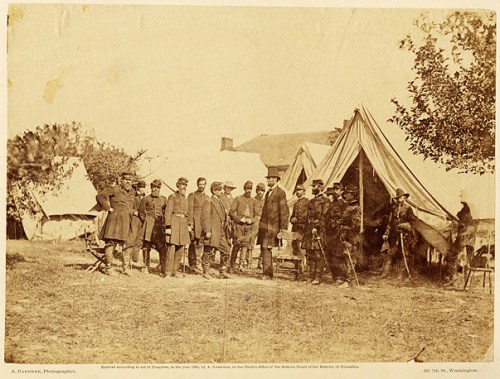
In order to try to better understand the different ways in which the moral virtues are exhibited and understood, on the one hand, by the person pursuing the theoretical life, and on the other, by the one who seeks the practical life, I propose to briefly look at the specific moral virtue of courage as understood by Aristotle.

A) Practical Courage and Its Complexities

In a lengthy section of Book III, Aristotle lays out his basic tenets regarding courage. The courageous, in order to truly exhibit her virtue, must know what she is doing, choose it for its own sake, and do so from a fixed and permanent disposition (1105b33). Moreover, her choosing involves aiming at the mean lying between rashness and cowardice as determined rationally by the prudent man (1107a1).

Practically speaking, the truly courageous are those who face the greatest terrors that humans can face, those of the battlefield where the dangers are “greatest and most glorious” (1115a30). City-states honour their dead; presumably then we would expect Aristotle to base the choosing of courageous actions as the means to the, more important, survival of the community by safeguarding the conditions for the common good. But Aristotle wants instead to investigate the viability of choosing the moral life for ITS own sake, not for anything external to it (only later to be considered under the banner of justice). This is the reason why for Aristotle civic courage, though the most akin to moral courage, is not quite it. The civically courageous yearns to receive something in return for what she knows involves the greatest of self-sacrifices, death. What moves her to act is truly something outside the action itself, namely the honour bestowed on those who are remembered as martyrs of the community. Now, if the greatest courage involves death in the battlefield, and such actions cannot be grounded on one’s own love of one’s country, then one is puzzled and led to ask, what precisely is the courageous rationally choosing, in choosing to die for its own sake?

According to Aristotle, having negatively characterized what courage is not, it should not be difficult to grasp what courage actually is (1117b22). But, if our target is that of happiness, at the core of which lie the moral virtues in a complete life (1101a16), and which is pleasant in itself because virtuous actions are pleasant in themselves (1199a14), it looks as though courage as virtue stands quite at odds with such a goal.

Aristotle tells us that the pleasurable in courage lies in the end obtained, just as boxers who receive punches, but in the end gain glory (if they win). So, and if the analogy holds, the courageous human will endure death and wounds “because it is a fine thing OR because it is a disgrace not to” (1117b8). (The ‘or’ revealing the tension between choosing it for its own sake, or for something else).

In the case of the happy human the conflict reaches its peak for his life is pleasurable and supremely worth living; “he will be distressed at the thought of death” (1117b10). However, as morally virtuous, she will choose, and more bravely than any other, to give up his life “because in preference to these blessings he chooses a gallant end in war” (1117b14)

B) Contemplation and courage

In Book X, *6, Aristotle reminds us that happiness involves activity chosen for its own sake; in it nothing is required beyond the exercise of the activity. (1176b9). Strikingly, it seems he still maintains that happiness consists in activities in accordance with virtue (1177a9, reminding us of 1098a16 in BK. I).

Chapter *7 therefore is quite illuminating in that it points to a reconsideration of the possibility of human happiness through the activity of contemplation; the “highest virtue” in us corresponding to the best in us (1177a12). Not only is this activity the most continuous, the most perfect and self-sufficient, one seeking no end beyond itself, but that which is most akin to the divine. The gods are the supremely happy beings, and we ought therefore to aim, not simply at living according to mortal thoughts, but instead, “so far as in us lies, to put on immortality” (1177b33).

Herein lies “the perfect happiness of man” (1177b33), not simply the secondary kind of “happiness” associated to the actions of the morally minded human. Politics and warfare (courage being as central virtue to both), lack the necessary leisure (1177b9) and are chosen for something external to themselves (1177b16). Moreover, all the virtues cataloged by the morally minded, are unworthy of the gods (1178b15), who instead are dearest to those engaging in the contemplative life (1179a28).

Given all this, in the case of a courage demanding situation, how will the contemplative human act? Will he run away leaving his friends and the city which is worthy of defending? Will he not seek to preserve himself instead?

Although the contemplative human is the most self-sufficient, he can practice contemplation by himself, Aristotle is quick to point out that “he does it better with the help of fellow-workers” (1177a33). Besides, like the moral human, the contemplative is in need of external necessities such as that of a healthy body (1178b31), and friends (1170b12). But in excess these can even become a hindrance (1178ba). Aristotle quotes both the man of practical affairs (Solon) and the man of wisdom (Anaxagoras) as agreeing on the  limited importance of such external accessories. The happy human might turn out to be “an oddity in most people’s eyes, because they judge from outward appearances” (1179a12). But how precisely would this human regard courageous action? Who could be such a courageous human?

Perhaps one ought to consider a being such as Socrates whose courage was displayed both in words and in deeds. He was courageous, not only in the battlefield, where particularly in retreat he shone like no other in the defense of his worth-while city and worth-while friends (Symp. 220 , Laches 181b), but also in the world of the struggle for articulation and clarification. The contemplative Socrates tries to get clearer on the nature of courage in the Platonic Laches. Although the dialogue seemingly ends in Socratic aporia, for he tells us “what I don’t advise is that we allow ourselves to remain in the same condition we are now” (201a), it carries the seeds to move beyond aporia in the very picture of Socrates. Socrates’ quest is one of self-understanding and courageous questioning of his and other’s way of life. Socrates will fight, but he will do so nowhere better than in the realm of understanding. Perhaps even deaths will follow and new re-births from a wise human who leads us “into giving an account of (our) present life-style and of the way (we have) spent it in the past” (187e). However, unlike Socrates, Aristotle, whose work so questions us while at the same time aiding us in clarifying our perplexities, did not choose the hemlock.

Read Full Post »

INTRODUCTION


 The very fact that Aristotle dedicates two complete books to the issue of friendship, coupled with the strategically important positioning of the discussion —–suspiciously close to the final considerations on the supreme value of the contemplative life and its relation to happiness—— immediately lets it known to the reader that she is entering what is both difficult and decisive territory. It is no small wonder, then, to see many questions flourishing as one pursues their reading: why are they situated in between two discussions of pleasure? Why are they broken down into two Books  separated by a seemingly untruthful “so much for our discussion of this topic” (1163b28)? Why did Aristotle not simply write one single Book, however long it might have turned out to be? Is he simply giving us a friendly break so that as listeners of his lectures we can digest all the information and gather our minds? Is there something to the fact that the discussion on friendship as expressed in the household and in the city is taken up in the first book? Is Aristotle pointing towards a form of friendship which somehow goes beyond all conventional links, just as natural right went beyond, or better, completed, its legal or conventional counterpart?

  These questions are indeed puzzling and difficult. But to begin to get clearer on some of them, however imperfectly and indirectly, I would like to center this essay on the difficult and sometimes obscure relation between the most perfect form of friendship, the noble variant, and the possibility of self-love. What exactly does Aristotle consider to be the characteristics of the former? Is the noble friend simply a selfless being intent of benefiting his friend over everything else? Is the self-lover identical to the happy human? Is Aristotle pointing towards a new form of self-love which goes beyond its conventional understanding?

  Although the issues I will explore in addressing some of these questions are still very undeveloped, in order to do so I propose to divide the essay into three sections. In the first I will begin by focusing on the three kinds of friendship as outlined in Book VIII; in particular by paying attention to the problematic relation between the inferior kinds based on utility and pleasure, and how still in the higher form these two elements seems to persist though perhaps modified to a great extent. In the second section I propose to look more closely at some of the aspects found in Book IX, particularly by looking at what kind of agent Aristotle has in mind when speaking of self-love, and contrasting her to the happy human being from which, if I understand the chapters involved correctly, she is quite distinct.. Finally, and all too briefly, I will take up some of the differences between Montaigne’s understanding  of friendship and Aristotle’s own position, particularly by centering on the death of one’s friends, and the consequent impossibility of attaining the fullest happiness achieveable by human beings.

   However, even before taking up the issue more closely, one must remind oneself continuously that Aristotle only once, in the whole of the Nicomachean Ethics (except of course for the very title itself),  refers to his friends. He does so early on in the complex discussion on the nature of the Good and the Platonic Forms. There he tells us: “yet, surely it would be thought better, or rather necessary (above all for philosophers) to refute, in defense of the truth, even views to which one is attached; since although both are dear, it is right to give preference to the truth” (1096a11-14). That among Aristotle’s friends one finds a Plato clearly sets quite a high standard on the nature of friendship, but that even in such a case there is something which goes beyond the allegiance to friends ——namely, a friendship of the truth—– is more telling indeed.


SECTION I: SOME ASPECTS ON NOBLE OR PERFECT FRIENDSHIP IN BOOK VIII.


  Having extensively praised the value of friendship as necessary to us humans even at the levels of the family and the political community, Aristotle proceeds to question the different views on what friendship has been taken to be (1155a32). In so doing once again Aristotle tries to clarify for us the internal workings of something we take to be central to our human self-understanding.

  Divergent answers have been given regarding the question “Who are friends?”, and in order to clarify where the possible nobility of friendship lies, Aristotle is led to ask among other things, whether there is one kind of friendship or several ones. Without even waiting for a reply Aristotle immediately tells us: ”those who think that there is only one, on the ground that it admits of degrees, have based their belief on insufficient evidence, because things that differ in species also admit of difference  in degree”. (1155b13ff) Now, if I understand this passage correctly, Aristotle seems to be arguing that there exist different kinds of friendship just as there are different kinds of fruits: apples, peaches, and even sour lemons. So it would be odd, for instance, to compare apples and oranges. But moreover, even within each distinct kind of friendship there seem to be varying degrees of perfection, so that some apples are more fully developed apples than others. And some lemons much more bitter than others.

  In order to begin to understand what these different species of friendship are, Aristotle asks us in chapter 2, to consider what is and how many are the objects of affection. Not everything is loved by us, Aristotle argues, but only the good, the pleasant and the useful (1155b16). Seemingly it is these three things which set us going, which somehow are sought as satisfying in different ways the needs we as humans have. However, Aristotle sets a sharp demarcatory line between the first two, the love of the good and the pleasant,  and the love of the useful. Only in the loving of the good and the pleasant do we aim at ends in themselves; in contrast, the love of the useful seems to involve a relation purely of a means towards an end. The latter, one could say, requires a relation of pure instrumentality. Now, given this sharp separation it seems not odd to ask: if all benefit is fundamentally the use of another to further one’s own good and pleasure, then, can there really be a truly selfless friend? Moreover, are not the good and the pleasurable, the things which are particularly “beneficial” to the soul, to the furtherance of its intellectual strength and emotional health?

  We know, having read on, that Aristotle will ground his three kinds of friendship upon these different objects of affection (which suspiciously do not include in them the beautiful), but instead of immediately listing these, Aristotle instead reminds us of something already asked before: do we humans love the Good simply/absolutely,  do we not love the good as somehow good for us? What would it mean to love the Good if loving it involved somehow transcending our bodily desiring nature, our human neediness? Would this not be a desire to end all desire, an objective which paradoxically ends human longing as we actually know it? Cautiously Aristotle answers our questions by telling us: “It seems that each individual loves what is good for himself; i.e. that while the good is absolutely lovable, it is the good of the individual that is lovable for the individual” (b24). The good, it seems, cannot be see independently of its being good for someone.

  (This discussion, of course, reminds one of the critique held against Plato’s conception of the Good. There, although Aristotle accepted the plausibility of the Platonic argument about whether it is not necessary to gain knowledge of the good  in order to attain the goods of practical life (1097a2-5), he criticized it primarily because in the realm of ethical and  practical affairs involving human conduct, one deals with particular individuals. So too the doctor centers his activity not so much on achieving health for human beings but rather the health “of a particular patient, because what he treats is the individual” (1097a12-14).)

   It looks as if  because the good is good for someone, Aristotle is led to remind us also that we humans do not in reality love what is good, but what appears  to us to be so (1155b24). This would seem to imply that our needy nature can at times go radically astray, missing the mark. This perhaps because many a time we may not be clear on ourselves, on what and why we desire what we do. Would not our friends, and our friendship to others, precisely allow us to clarify ourselves so as to get clarity on this appearance?

  However, be that as it may, it is only after having provided us with the tripartite division of the objects of affection, and reminded us of two earlier  central points, that Aristotle finally returns to his discussion of friendship (1155b27). We speak of friendship where we sensibly can expect some return of affection. As humans it seems as though friendship gives us something which inanimate objects (perhaps even the books we love) cannot provide. This is so because in the case of inanimate objects we cannot wish for the good of the object. In  contrast, it is characteristic of friendship, Aristotle tells us ‘they’ say —–it is not clear precisely who this ‘they’ are—– that we “ought to wish (our friend) good for his own sake” (1159b30). Friends are truly friends when such a wish becomes reciprocal and mutual affection sets in.

   But after having heard this one cannot but be puzzled. Did not Aristotle say just a few lines before that what the individual loves is precisely what is, or at least appears, good for himself? Is it possible then to simultaneously seek the good for ourselves while at the same time arguing that what we really do in seeking friends is actually to do the good for the other? Moreover, if the lovable objects upon which the different kinds of friendship will be based, involve not only the good but also the pleasant and the useful, then how precisely do we, for instance, ‘use’ our friends as means, while almost contradictorily at the same time claiming that when we do so we are actually seeking their good  and not ours? Will good friends not have to redefine the foundations of their mutual benefit? However, did Aristotle not say that the different forms of friendship were different in KIND, not in degree?

  Having quietly alluded to these puzzles Aristotle finally  gives us his famous tripartite division of the kinds of friendship.  The three forms correspond neatly to the three objects of affection: there is a friendship based on utility, another on pleasure, and the final, most perfect friendship, on goodness. All of these, Aristotle claims, are characterized by involving not only mutual affection known to both parties, but also a wishing “for each other’s good in respect of the quality for which they love (each other)” (1156a7). Bewildered we are led to ask once again, does Aristotle seriously entertain the idea that when we enter into relationships of utility we are actually doing a good to the other? This is particularly problematic in view of the fact that Aristotle points out, when we desire the good of the other in terms of utility or pleasure, we are primarily motivated by our own good, not that of our friend: “these friendships (being)  accidental, because the person loved is not loved on the ground of his actual nature, but merely as providing some benefit or pleasure” (1156a17-8). Now, if this is true, then how do good humans ever end up feeling a need for the other?

  Having said this Aristotle now proceeds to characterize each friendship. The friendship of utility is of an impermanent nature and found primarily among the elderly and middle aged, specifically those centered on seeking their own advantage. This allusion to the elderly, who are continuously regarded as difficult to be friends with and even linked to the sour (1158a5),  reminds the reader of Cephalus’ concern for money in the beginning of the Republic. No wonder then that, as the Book progresses, we will be told that it is these relationships which for the most part “give rise to complaints because since each associates with each other for his own benefit, they are always wanting the better of the bargain, and thinking that they have less than they should, and grumbling because they do not get as much as they want, although they deserve it” (1162b17ff) (see also 1157a14).

 Friendships based on pleasure, in contrast to the utilitarian ones, are characteristic of the young of whom, from the start of the book, we are told tend to follow their feelings (1095a4ff). Although this might sometimes lead them astray, this too makes them much more capable of having a more generous nature (1158a22). In this they differ from the instrumentalist. However, they share with them the fact that their friendships are anything but long lasting: their erotic impermanence proves ground even for some Aristotelian humour: “that is why they fall in and out of friendship quickly, changing their attitude often within the same day” (1156b3-4). What kind of friendship would prove both much more permanent and agreeable?

  It looks as though to find such characteristics we have to turn to the third form of friendship, the one founded on the goodness of both (or more) parties. At first we are told that this friendship stands in stark contrast to what we have been told about the other two. It seems as though only until now do we come up with a real selfless mutual regard. It is the friendship “of those who are good and similar in their goodness” (1156b5) who alone are capable of wishing their friends good for what they are essentially, and not simply accidentally (1156b9).

   However, as the discussion moves on Aristotle proceeds to make a very puzzling remark, one which seems to run counter to what was argued before. According to him at this level “also each party is good both absolutely and for his friend since the good are both good absolutely and USEFUL to each other. Similarly they PLEASE one another too; for the good are pleasing both absolutely and to each other” (1156b13-16).  (see also 1157a1-3) Saying this seems to imply that the three forms of friendship are then not really like different fruits, but rather like one fruit capable of perfection in all its constituent elements. Does this not come closer to the way we perceive friendship? If so, would this not allow us to better comprehend how it is that the good humans, which are desiring beings like all of us, by somehow transforming what they take to be pleasurable and useful, nonetheless see in the pleasurable and the beneficial the starting ground for the full-fledged formation of mutual goodwill?

   Aristotle explicitly stresses the fact that even at this level both parties receive a benefit (11565b9). And moreover each provides the other, through his healthy outlook and flourishing nature, the possibility of pleasure: for “everyone is pleased with his own conduct and conduct that resembles it” (1156b17). And this is much more so of those who are good. However, if this is so why does the good friend not simply turn out to be a mirror of self-satisfaction, rather than a window for self-comprehension and that of the world? What if this mirror, as we shall see in Book IX, ends up being somewhat stained?

  Of course Aristotle goes on to tell us that such relationships are extremely rare among us humans, not only because these friends need intimacy and time to know each other —— Aristotle uses the example of eating salt together which seems to portray the idea not of happiness but rather of making it together “through tough times”—— but also because of the fact that these good men only become friends once they have proven, and know each other is worthy of their love (1156b23-29). But if this is true, how is it possible then for some good humans to actually be deluded, thus falling into utility or pleasure based friendships? (1157a15).

  It seems then that the good humans are not blind to the pleasure and the benefits that accrue from engaging in conversation and spending time  with each other. But what they seem to find pleasurable and beneficial seems to be radically different from what is normally taken to be so. Perhaps part of the answer starts to develop in Chapter 5 where Aristotle reminds us that friendship involves not only a state and a feeling, but primarily an activity. Likewise it seems as though it is not a chance affair  that,  here for the first time in the whole discussion of friendship, Aristotle mentions the happy human being. We are told that nothing is so characteristic of friends as spending time together because they are agreeable to each other. And in an oddly situated parenthetical remark we are told “those who are in need are anxious for help, and even the supremely happy are eager for company, for they above all are the least suited by a solitary existence” (1157b20-20).

  Happiness comes back onto the stage, but it does very indirectly, silently. Happiness too, we were told in Book I involved activity, it was precisely the end of all actions. (1097b19-21) Perhaps only later on will it become clearer what this activity, in the case of friends, might involve. However, we are reminded too that friendship involves a state, a permanent disposition from which good choice emerges in accordance to moral virtue. Particularly in the highest form of friendship, the good friends choose each other, and choice we know “is either appetitive intellect or intellectual appetition” (1139b3-4). When choosing a friend then desire has a say, and this Aristotle clearly argues as we read on: “for when a good man becomes a friend to another he becomes that other’s good; so each loves his own good, and repays what he receives by wishing the good of the other and giving him pleasure” (1157b30-31). In the case of the happy human too that pleasure is central, for she would not even pursue the Good “if (s)he found it unpleasant” (1158a24).

   Now,  also in the case of the happy human being the paradox we alluded to in friendship, seems to recur. The friends of the happy human seemingly are not Gods, for Aristotle tells us friendship with the gods is impossible because between us and them there lies too great a gulf (1159a6). This is why it seems that in the case of the happy human, if she acts for the sake of the good of the friend, he must wish for his friend to remain human: “so if we were right in saying that a friend wishes his friend’s good for his friend’s sake the latter must remain as he is, whatever that may be. So his friend will wish for him the greatest goods possible for a human being. And presumably not all of these; because it is for himself that everyone most of all wishes what is good” (1159a 10-12). Now this seems unproblematic except for the fact that in Book X we will be told something quite striking, true happiness lies in contemplation and this kind of life involves a move beyond the merely human “for any man who lives it will do so not as a human being but in virtue of something divine within him .. and we ought not to listen to those who warn us ‘man should not think the thoughts of man’” (1177b26 and 31-32). The happy human too seems to be caught in the tension between seeking his own good, and at the same time, seeking the good of his friends. However one is led to ask, is the divine self-sufficiency towards which the happiest and healthiest of humans strive, comprehensible to us in our human terms which precisely involve needy friends? Will Book IX, in which the problematic relation between friendship, self-love and happiness is discussed allow us to, however faintly, get clearer on these questions?


SECTION II: SOME TENTATIVE ASPECTS OF  THE IDEAS OF SELF-LOVE  AND HAPPINESS IN BOOK IX


 Aristotle resumes his discussion of friendship in Book IX by placing particular emphasis on the motives that underpin the mutual affection between friends. Again he reminds us once more that the highest form of friendship, that founded on character, is reeally disinterested (1164a13). This is an assertion which would seem to take us back to the paradox to which we alluded in the previous section. However, already in chapter 1 new information is given to us. In speaking of the relationship between what is due to a benefactor Aristotle suddenly, out of the blue, mentions philosophy. An activity which in its very name alludes to a kind of friendship, a friendship of wisdom; the useless activity in which Anaxagoras and Thales were engaged (1141a5). In contrast to the Sophists who require a pay back in monetary terms for their services, the benefits accrued by philosophy involve a strikingly unique payless payback: “presumably it is enough if (as in the case of the gods or one’s parents) the beneficiary makes such a return as lies in his power” (1164a5). Perhaps the highest possible form of friendship between humans is founded on such a perception of mutual benefit. But, according to Aristotle this view is inconceivable for most who tend to see the relation between beneficiary and benefactor as analogous to the relationship between a creditor and a debtor. They do so because they are looking at things from the “dark side”, something which Aristotle tells us “is not inconsistent with human nature, because most people have short memories and are anxious to be well treated than to treat others well” (1167b26). Generosity seems not to be the order of the day amongst most.

  To this sudden unexpected appearance Aristotle adds in chapter 2 a reminder about the methodological difficulties involved in dealing with practical affairs. In considering the actual complexities of the problems involved in our friendships —–in particular our conflicting allegiances, our friends, the household, the city—– Aristotle reminds us that “it is perhaps no easy matter to lay down exact lines in such cases, because they involve a great many differences of every kind” (1164b27-8) (see also 1165a12). One is led to ask, why does Aristotle wait until this point to remind us of this? Why not mention it at the beginning of Book VIII with its contradictory assertions? Is Aristotle letting us know here that the classificatory divisions set in place are somehow in Book IX more closely tied to actual practical conflicts such as the grounds for dissolving friendship?

  It is by focusing on the latter that it becomes clear that the clear cut divisions and assertions found in Book VIII, are revisited and enriched. Take for instance the, perhaps all too frequent, cases of deception and self-deception among friends. Even though previously we have been told that friendship among the good makes  slander an impossibility (1157a21), it seems as though sometimes things can, and do go wrong. This is particularly so when “when the basis of their friendship is not what (friends) suppose to be” (1165b6). This is puzzling, particularly in the case of good friends, whom we were told only become friends precisely after they know that each other is worthy of their affection. How then does it happen that sometimes they can be deceived by the other so that in such case it is correct to protest  “even more than if it had been a case of uttering false coin, since the offense concerns something more valuable than money” ? (1165b11).

  We would expect Aristotle to somehow tell us that in such cases the good must somehow run for cover and protect his own good. However, astonishing as it might seem, Aristotle tells us that even if the other turns out to be, or even appear like a villain (one here is somewhat confused and is led to ask, what does ‘appearing like a villain’ mean?),  the good friend ought to stay and, as far as possible, help out. This is of course not in cases of utter depravity (but how would a good man ever end up with an utterly depraved one?), but in those cases where a transformation of the situation is possible: “those who are capable of recovery are entitled to our help for their characters even more than for their fortunes, inasmuch as the character is a higher thing and more closely bound up with friendship” (1165b18-20). Here, one could think  of a friend of ours who due to difficult circumstances has sought, or had sought, refuge in drinking or worse. It seems as though sometimes friendships do involve sacrifices, but in  surpassing them there lies too the strongest of goodwills possible. (Perhaps we know this because we have found ourselves in difficult times, and yet have not failed to remain our own best friends).

 Perhaps then, by looking at the feelings we have towards ourselves, we might understand why it is that it is possible both to seek our own good while at the same time that of our friends. In chapter 4 Aristotle claims that not only the feelings we have towards our neighbors, but also the characteristics of the different kinds of friendship, SEEM to be derived from our feelings to ourselves (1166a1-3). He then proceeds to do three things: i) to tell us how it is people define friends (1166a3ff), ii) to tell us how the morally good man defines himself (a11ff), and finally, iii) to tell us, not exactly how the bad human defines himself, but how the good man, as standard, sheds light on the torn nature of the bad humans; who, besides, according to Aristotle are the majority (1166b2).

  Will we finally arrive at an easing of the tension between the seeking for our good and that of our friend. It does not seem so. This is so for if one looks at the lists characterizing the definition of a friend and that of the feelings we hold towards ourselves, not only do they vary in order and are actually transformed as Aristotle goes through them, but more importantly, seem to  stand in outright conflict at times.

  The first and most obvious tension is that to which we have alluded throughout: while we define a good friend as one who first of all wishes to effect the good or apparent good for us, the healthy feelings towards ourselves involve seeking the good for us, not for another. But, another more striking tension seems to come to light when we realize that a good friend is he who wishes the existence and preservation of his friend for his friend’s sake. Now, in the case of our friendly feelings towards ourselves we desire not only our preservation and safety, but Aristotle goes on to say, the preservation of the highest part in us. What to do then in the case of life-threatening situations in which the life of our friend and ours is at stake? Precisely in such extreme situations the tension between our preservation and our friend’s comes to light. However that may turn out to be, after looking at the different characteristics, Aristotle concludes that self-love “it would seem from what we have said ….. IS possible” (1166b1-2).                                           

   But, exactly what is involved in this self-love which leads to goodwill towards our friend? As we have seen it seems to imply a reconsideration of what is to be understood as beneficial between the strongest and healthiest human beings. And not only that, but a reconsideration of what is beneficial to ourselves, that is to say, in what self-love lies. According to Aristotle “the author of a kindness feels affection and love for the recipient even if he neither is nor is likely to be of any use to him”. The theme of disinterest comes to the surface once again. This time it is exemplified most clearly in the works of the poets who regard their creations even as their children (1168a1). Aristotle allows us to see what is going on in the creative activity of the poets. A poet’s creations provide the artist no other benefit than that of a self-clarification which never ends, but is a continuous process founded on a rare and strong openness, few have, towards the world and themselves. Just as in the case of the poets the benefactor loves his handiwork better than work loves the maker. As to why this is so is explained in a complex way, one which prefigures the discussion of the need for friends of the happy human: “The reason for this is that existence is to everyone the object of choice and love, and we exist through activity (because we exist by living and acting); and the maker of the work exists, in a sense, through his activity… the maker loves his work, because he loves existence. This is a natural principle for the work reveals in actuality what is only potentially” (1168a4ff). Benevolence allow friends to mutually make themselves into beings who delight in their seeing what is potentially in them flourish in different forms. However both in the case of poets and benefactors somoething is lacking; neither of them is “loved” back by their work, which is precisely what we somehow expect from our friends.

  Presumably if we look at the issue of self-love we will start to move beyond this paradox. In chapter 8, where the discussion of self-love finds its climatic formulation, Aristotle mentions two conflicting views. The first view of self-love seems to involve a two-sided coin. Under this view people believe that the self-lovers are truly bad men whose chief concern is only with their selfish motives. And simultaneously, on the other side of the coin, these same people view the good man as the complete opposite, namely the purely self-less individual who acting from fine motive does everything “for sake of his friend and neglects his own interest”  (111168b2). As regards this two-sided camp founded on the view “that a man should love his best friend most”, Aristotle is quick to tell us that it is not surprisingly, not borne by the facts (b3-4).

  To this position, I think,  Aristotle counters another starting at  (b4) with the following words “But a man’s best friend is the one who not only wishes him well but wishes it for his own sake (even though nobody will ever know it); and this condition is best fulfilled by his attitude towards himself” (1168b5). Unlike the previous camp built on absolute self-sacrifice, and perhaps getting something in return for it, this new camp is seemingly not so interested in what others might think. It is primarily concerned on what the person thinks about himself for  “a man’s best friend is himself” (1168b9). These two broad camps inevitably stand in conflict with each other, and Aristotle is quick to point this out: “naturally it is hard to say which of these opinions one should follow since each has some plausibility” (1168b10).

  In order to clarify what underlies each camp, Aristotle tells us that we ought to get clearer on the different ways that people view self-love. One way, which is that of the first camp, is to link it to the irrational cravings of humans seeking more than their share in goods such as money, public honours and bodily pleasures: “because most people have a craving for these, and set their hearts on them as the greatest goods, which makes them objects of fiercest competition” (1168b18ff). Immediately after having mentioned this first side of the coin, Aristotle points out that on the other hand the person performing just (which implies acting for the sake of the good of another) or temperate acts and in general acting honourably (which seems to involve a desire for public recognition), of this exceptional kind of person, “certainly nobody would reproach him for being a self-lover”. (1168b27).

  It seems to me that Aristotle is here still taking us for a voyage in the geography of the first camp, the one in which selflessness is the basis of true self-love. This person “might be considered to have a better title to the name” (1168b28). Why so? This is so because just as was argued in the feelings towards oneself he wishes what is good on account of the intellectual part in him (1166a18) and  this human being assigns himself what is most honourable and most truly good (1168b32). Moreover, this human acts voluntarily through reasoned acts so that in comparison to the self-lovers who incur reproach he is “far superior … as life ruled by reason is to life ruled by feeling, and as desire for what is fine is to desire for an apparent advantage” (1169ba7)

  It seems then that we have found the true self-lover, who in loving himself actually does the good thing for his friend. However, is the self-lover Aristotle speaking of here really that selfless, benefiting the other without himself seeking some kind of return? Would this human act as he does even if ‘nobody will ever know it’? Or does this human really bring to an end the paradox of friendship alluded to in section I, as Aristotle seems to argue “and if everyone were striving for what is fine, and trying his hardest to do the finest deeds, then both the public welfare would be truly served, and each individual would enjoy the greatest goods, since virtue is of this kind” (111169a12).

 It seems as though we have reason to be rather optimistic. However, this optimism seems to collapse once Aristotle tells us a little more about the kind of actions in which this selfless self-lover is engaged. According to Aristotle this morally good man, presumably engaged in moral and noble friendships, “performs many actions for the sake of his friends and his country, and if necessary even dies for them. For he will sacrifice both money and honours and in general the goods that people struggle to obtain, in his pursuit of what is morally fine” (1169a19). The most noble of friends seems to desire even death before upsetting the recognition of others. This becomes more evident yet if one looks closely at the actions in which this self-lover is involved. In reality, if I understand it correctly, his disinterest seems to hide a craving for something more, some kind of payback for his activities. This would seem to account for the fact that this human would rather have intense pleasure for a short period of time rather than quiet pleasure for a long period of time, live finely one year rather than indifferently many and, more strikingly yet, do one glorious deed rather than many petty ones. 1169a23-5). Do this actions not evidently involve something beyond pure  selflessness, so that even the most selfless act is done out of a need for public recognition: “this result is presumably achieved by those who give their lives for others; so their choice is a glorious prize”? (1169a25).

  Somehow these words ring a bell. They stand, I believe, as a striking reference to the portrait of the magnanimous or high-spirited human “who does not take petty risks, nor does he court danger, because there are few things that he values highly; but he takes great risks, and when he faces danger he is unsparing of his life, because to him there are circumstances in which it is not worth living” (1124b6). The magnanimous human in his actions clearly disrupts two of the fundamental factors involved in the possibility of achieving human happiness: first, the fact that  happiness involves a complete life time (1100b20 and 1098a20), and second, the fact that the happy human is, of humans, the most self-sufficient (1097b21). Moreover this form of self-lover, who is ready to give up his life for recognition, clearly is tied to an inferior view of courage namely, that of civic courage which, though the closest to real courage, is not courage precisely because of its linkage to public recognition (1116a28). It is worth recalling too the few words dedicated to the happy human in that specific discussion, the happier he is “the more he will be distressed at the thought of death. For to such a man life is supremely worth living; and he is loosing one of his greatest blessings and he knows it and this is a grievous thing” (11711ff). Happiness seems to require a new view of what self-love is all about.

  In this sense it is really illuminating to find that the chapter which follows the discussion of  self-love (which I take has really moved only in the field of the first camp), deals directly with the happy human and the question as to whether she needs friends or not. Why introduce this question precisely here? Does Aristotle intend us to consider what a new conception of self-love with a view to happiness would require? What would be the “needs” of this most complete human type?

  As was the case with the discussion on self-love, also here Aristotle finds two conflicting camps. According to the first, the happy human needs no friends for she is wholly self-sufficient, needing nothing further to complete his existence (1169b7). To this position Aristotle immediately counterargues that this position seems quite odd for it is strange not only not to assign the happy human friends, who are the ‘greatest of external goods” and allow her to confer benefits upon them, but also  because it is paradoxical to have the happiest human living in solitude while humans are characterized by being social creatures. These two “arguments” thus point to the need for the happy human to have friends. (1169b23).

  Having said this, Aristotle goes on to look more carefully at the first camp: “what then, is the meaning of those who uphold the first view, and what truth is there in their argument?” (1169b23). The idea that the happy human needs no friends stems from the erroneous popular conception of friendship conceived solely in terms of utility or pleasure. (1169b26-28). Of the first, the happy human has no need, of the second “only to a limited extent”. It is because of this that the happy human is thought not to need friends, “but this is presumably not true” (1169b29)

   The happy human seems to need friends, but friends of a particular nature. In him the need for another seems to have been so transformed that a new kind of benevolence shines forth. But how exactly is this so?  It seems that some of it has to do with a process towards our self-formation. In trying to make it clearer for us Aristotle returns to the very beginnings of the Nicomachean Ethics.   

  Although the arguments put forward by Aristotle are extremely complex and difficult to follow, I will try to understand in what general direction they are moving. Happiness, Aristotle told us way back, (1098a7, 16, b31) is a kind of activity. Now, if friendship brings about the possibility not of extreme self-sacrifice, but of mutual enrichment then it too involves a kind of activity. Both friendship and happiness then involve not a possessing of something already given, but more precisely a task and a work which must be given time to grow its fruits and reproduce them both in oneself and in others. Happiness, Aristotle tells us, consists  in living and being active, but not just living for the sake of preserving life; more importantly living so as to bring to light those activities which stand as highest possibilities for us human beings. Now, among the multiple and concentrated arguments put forward by Aristotle in what is a weird rush, he alludes to the value of a friend as guarantor against the possibility of self-deception: as Aristotle puts it in an important conditional statement, “if we are better able to observe our neighbors than ourselves, and their actions than our own” (1169b33-4). Presumably we do not only delight in sharing in the birth and rebirth of another human being intent on exploring his capacities, but we do so primarily because we too, to an extent have sworn allegiance to this never ending process of change. As Aristotle puts it, in order to fully enjoy life, the happy human needs others for it is difficult to “keep up continuous activity by oneself” (1170a6). Friends stand as references and guides towards mutual goals.

   Finally, and in order to defend the view that happy humans do need friends, Aristotle provides his reader with a set of very complex and scientific arguments. (Only twice has Aristotle used scientific arguments previously: in his critique of Plato, and in his reference to Socrates’ doctrine concerning the impossibility of weakness of the will). In what is a tidal wave of intricately interconnected arguments, I would like to signal some in particular. First of all one finds in them a position which stands in stark contrast to the attitude of the self-lover of chapter 8. Here in contrast we are reminded that for the happy human “Life is in itself good and pleasant (as appears from the fact that it is sought after by all, especially by those who are virtuous and truly happy, because their life is in the highest degree desirable and their existence the truest felicity” (1170a26). Second, and in contrast to the exclusive reference to the  rational part which the self-lover gratifies (1168b34), here in contrast the highest involves much more than this: “hence it appears that to live is primarily to perceive or to think” (1170a17) and furhter down “to be conscious that we are perceiving or thinking is to be conscious of our existence” (1170a33). Third, we are reminded that this capacity for perceiving or thinking is a “capacity relative to its activity, and its realization is dependent upon the activity” (1170a17); in other words, it is a determinate activity, one in which a potentiality is capable of  being actualized. But how, more precisely, can such activity be brought to the fore in all its strength?

  As a conclusion to his long and complicated scientific argument, Aristotle points out:

            If all this is true, it follows that for a given person the existence of his friend is desirable, or almost as desirable as his own.. But as we saw, what makes      existence desirable is the consciousness of one’s own goodness and such      consciousness is pleasant in itself. So a person ought to be conscious of his             friend’s existence, and this can be achieved by living together and conversing            and exchanging ideas with him — for this would seem to be what living    together means in the case of human beings; not being pastured like cattle in             the same field (1170b5-13).


The happy human’s type of self-love is primary, and from it flows his goodwill towards others whose existence is “almost as desirable as his own”. But though clearly of the most self-sufficient kind, this human nevertheless knows quite well of a strong bondage which becomes redirected with another’s presence towards higher pleasures and benefits. This  is why although Aristotle, unlike Plato is puzzingly silent about erotic love, he nevertheless sees in its passionate force something akin, though distinct from the strongest friends. (for the strength of the desire as compared to that of lovers see 1171a8ff and 1171b30).

   These happy human beings realize that the consciousness they aim at is not itself a given, but must “be actualized in their life together” (1172a1). All humans know of this desire to share in the occupations and activities which “constitute… (their) existence or makes life worth living”. Some, Aristotle goes on to tell us, seek each other simply to drink, other to play dice, yet others to engage in athletic competitions. But some see in the philosophical way of life that which provides them with the highest satisfaction (1172a5). As contrasted to the friendship of what Aristotle considers to be the “worthless”:

            the friendship of the good is good, and increases in goodness because of their         association. They seem even to become better men by exercising their      friendship and improving each other; for the traits that they admire in each       other get transferred to themselves. Hence the saying: From good men goodness     (11728-13).


Engaged in the mutually enriching activity of good happy humans, these friends together,, but without having become one, come slowly to perceive and act on that terrain within which goodness is nourished and flourishes by some for us to try to emulate.


SECTION III: MONTAIGNE’S VIEWS ON FRIENDSHIP IN LIGHT OF ARISTOTLE’S   


  To conclude this already too extensive essay, in this final section I would like, briefly and very sketchily, to hint at some of the striking differences one finds between Montainge’s views on friendship and the one’s already addressed in Aristotle.  However, rather than being a fully developed section, I take this final words to be more like an incomplete appendix which, perhaps later on, might be delineated and completed much more fully. In trying to make sense of the differences between both authors I propose to follow a numerical ordering. Of course the different themes  interact in deep ways, but for the sake of clarity such ennumaration may end up proving helpful.

   But before looking at Montaigne himself one can always remember Freud’s own words, found in Civilization and its Discontents, regarding the search for human happiness through a life centered on a strong bondage between lovers. For him “the weak side of this tehnique is that we are never so defenceless agaisnt suffering as when we love, never so helpelessly unhappy as when we have lost our loved object or its love“ (Penguin, 270). Words which seem to fit quite perfectly the whole underlying position of Montaigne.

  Now, some of the striking differences that one finds between the Greek and  French thinkers are:


1) Montaigne begins his essay by attempting to imitate  a painter who fills a wall with grotesque and fantastic pictures “having no other charm than their variety and strangeness” (161). He himself perceives his own works  as “grotesque bodies, pieced together of sundry members, without definite shape, having neither order, coherence or proportion, except by accident” (161). This imitation, not of nature, but of the grotesque, stands in outright conflict with the whole Aristotlian position which sees in nature a teleological ordering of which we form a part, and without which the highest form of happiness seems inconceivable.


2) Montaigne throughout his essay frequently refers to, either the intervention of chance or god’s will, in his attempt to comprehend how incredible it seems to him that a person such as de la Boétie somehow came to be part of his life. As he puts it: “preparing the way for that friendship which we cherished, so long as it was God’s will, with such entirety and such perfection …. It needs so many concurring factors to build it up that it is much if fortune attains to it in three centuries” (162) (or elsewhere: “I know not what inexplicable and fated power that brought this union …. I believe it was by some decree of heaven” (166)) However, according to Montaigne himself it is this God which has taken the friend away from him: “which I/ Shall ever hold, for so ye gods have willed/ sacred to grief and honour without end” (171) In contrast, as we saw, for Aristole, not only is there a gulf between us and the Gods (which are of a very different nature than Montainge’s), but likewise friendship involves choice, not simply an inarticulate fate.


3) Montainge’s emphasis on the type of bond which comes about among friends reflects a loss of self in which one even turns out to have the other in his power. This position cannot but remind one, to what occurs to Aristophanes’ half creatures permanently looking for their other halves in order to achieve true completion (though it is not by any means identical for Aristophanes speaks of erotic lovers; and ‘eros’ is strangely absent froom Aristotle’s account). As Montainge puts it: “in the friendship I speak of they mingle and unite one with the other in a blend so perfect that the seam which has joined them together is effaced, and can never be found again”  (166). (or elsewhere “It is I know not what quintessence of all this mixture which, having seized my whole soul, brought it to plunge and loose itself in his” (167); ”the complete fusion of wills” (168); “one soul in two bodies” (169)). This particular outlook seems to deny the view that, as we saw, for the happiest most self-sufficient human, the existence of his friend is “almost” as desirable as his own; ‘almost’, but not quite the same.


4) From Montaigne’s emphasis on a strong fussion between friends, follow demands which perhaps to others, who have not experienced such proximity, appear wholly irrational. As Montaigne puts it: “this answer carries no better sound than mine would do to one that should question to me in this fashion: “If your will should command you to kill your daughter, would you fdo it?. and I should answer that I would. For this carries no proof of consent to such act, because I have no doubt of my own will, and just as little of the will of such a friend. No action of his, what face soever it might bear, could be presented to me of which I could not instantly find the moving cause” (167). (and elsewhere: “should trust myself more willingly with him than with myself” (168)) For Aristotle it would seem odd that a friend would even make us entertain such thoughts. And as we know, Aristotle criticizes even friends of the caliber of Plato precisely because their outlooks might prove, in the realm of pratical life, to have diverse shortcomings. Likewise, Aristotle struggles as we saw above with the possibilities both of deception and self-deception among what amy appear to be even the noblest of friends.


5) Tied to the previous remarks, one finds a difference regarding the actual number of friends one can have. For Aristotle in the case of the happy human: “presumably there is no one correct number (of friends), but anything between certain limits” seems reasonable (1170b30). It is true that Aristotle does remind us that in friendships “the celebrated cases are reported as occurring between two” (1171a14). But his understanding of the helathiest friendships is not limited to two beings fused together by the power of a Hephaestus. In contrast, Montaigne tells us about his most perfect form of friendship: “(it) is indivisible; each one gives himself so entirely to his frriend that he has nothing left to distribute to others; on the contrary, he is sorry that he is not double, triple or quadruple, and that he has not several souls and several wills, to confer them all upon this ONE object” (169). Montaigne had one friend in his life, and now he has departed.


6) Yet another striking difference partially alluded to above, lies in the actual reference to particular individuals in the analysis. We know exactly who Montaigne is talking about, though we are not so clear as to the character of his friend. But this seems to be not a fundamental problem for him because he speaks only to those who have actually experienced such a mutual belonging:: “so I also, could wish to speak to such as have had experience of what I say. But knowing how remote a thing such a friendship is from common practice and how rarely it is found, I do not look to meet with any competent judge. For even the discourses of antiquity upon this subject seem to me flat in comparison with the feeling of it. And, in this particular, the facts surpass even the precepts of philosophy” (170). The attack on writings such as that of Aristotle seems to be  very poignant and clear. However, it is likewise true that Montaigne fails to see that in Plato something like what he speaks of can be seen not only in the confrontation between Alcibiades (and in a different sense Aristophanes) and Socrates in the Symposium, but also in the type of “symbolic” pederasty found in the beautiful Phaedrus.


7) And this brings us to another discrepancy between both writers. There seems to be in their view of friendship a struggle between poetry and philosophy. Montaigne finds in the poets the only words to express the force and strength of what he as needy human being feels. Thus he persistently quotes writers who have experienced what he, right now feels burdens his heart with an overwhelming weight: “Why should I linger on, with deadened sense/ and ever-aching heart/ a worthless fragment of a fallen shrine?/ No, no one day hath seen thy death and mine” (172). Now, this tragic overtones, though comprehensible to Aristotle, nevertheless are precisely what stand in the way of actual human self-sufficiency and the completeness required in order to pursue the contemplative life. Thus is speaking of whether we need friends in good or bad times, Aristotle tells us: “a man of resolute nature takes no care to involve his friends in his troubles ….; and in general does not give them a chance to lament with him, because he himself does not indulge in lamentation either” (1171b6ff).


8) The previous difference brings us to the last and most fundamental clash between both perspectives. Just as in Freud, for Montaigne it is painfully clear that the death of his friend has so marked his life that it is a blow from which he cannot nor sees how it is possible to recover. Life without him is a life of nebulosity in which all lights have been exhausted, and consequently all consciousness fades. If it were not because of the grace of God such condition would truly be unbearable:: “For in truth, if I compare the rest of my life, though with the grace of God it has passed sweetly and easily and, except for the loss of such a friend, free form any griveous affliction and in great tranquility of mind, seeing I was content with my natural and original advantages without seeking others, if I should compare it all, I say, with the four years that were granted to me to enjoy the sweet company and society of that man, it is nothing but smoke, nothing but a dark and irksome night” (171). Montaigne is now only half of what he once knew was possible, namely a oneness of unspeakable strength and beauty. In contrast to such a life devoid of happiness and concentrated on “tranquility”, Aristotle tells us, as part of the “scientific argument” to which we alluded at the end of our second section: “we must not take the case of a vicious life and corrupt life, or of one that is passed in suffering, because such a life is indeterminate, just as are the conditions that attach to it” (1170a22-4). The happy human is not content with what is given her, but seeks as far as possible to allow and foster, with the desirable presence of others, the growth of what as humans, and more than humans, we are capable of.


BIBLIOGRAPHY


A) Primary Sources


Aristotle, The Ethics of Aristotle, Penguin Books, London, 1rst- 1953, 1988. Translated by J.A.K. Thomson.


Montaigne, Michel de, The Essays of Michel de Montaigne, Alfred A. Knopf, New York, 1934, Translated by Jacob Zeilin. Volume I, Essay 28,  pgs 161-173.

Read Full Post »

IMPORTANT: PLEASE REDUCE FONT IN BROWSER

AS I HAVE HAD SERIOUS PROBLEMS SCANNING THIS ESSAY

LANGUAGE, GOODS AND DIALOGUE: SOME TENTATIVE ASPECTS OF THE IMMIGRANT CONDITION

INTRODUCTION

Albert Camus carried his beloved Algiers with him throughout his whole life. Both his

body and pen knew of a sky, a sea, a sun and an earth which were radically different

from those of the Europe he went to live in. This other sky, sea, sun and earth were

those that constituted the unforgettable landscapes of his homeland. Camus knew, like

few have, about the life that begins far from one’s native land; a life which in the most

extreme cases is one of exile. In his beautiful short essay entitled Summer in Algiers,

this lyrical philosopher summarizes, in few words, this feeling: “it is well known that

one’s native land is always recognized at the moment of loosing it. For those who are

uneasy about themselves their native land is the one that negates them” (152). (*1)

These brief remarks on Camus allow us to begin to shed some light on the complex

situation in which immigrants from around the globe find themselves. Most

immigrants, I believe, know of this loss, they know of this negation and of this

uneasiness. They are rather daring figures who set out to sail leaving behind the

landscape –usually a nation-state— in which their values, commitments and

practices were set within a meaningful cultural and linguistic context. Immigrants carry

with them more than physical suitcases, they carry a heavy load of cultural heritage

which has shaped and allowed them to grow as they have.

Nevertheless immigrants dare to move, they are not static. To migrate is their

characteristic activity. But once immigrants have ‘landed’, that is to say, have become

‘landed-immigrants’, they come into contact with a societal reality which, to most, is to

a large extent new. It is one with its own standards, language, and modes of self-

perception; one which, perhaps, may appear alien.

It is this double belonging that which, I believe, marks immigrants. It is a tension

governed by Camusian ‘uneasiness’, which, at least, first generation immigrants feel

acutely. And truly there is nothing easy about migration; it is literally, an ‘un’-easy

affair. The familiar is displaced, and in its place, the immigrant is set within an

unfamiliar framework which provides her with, in many cases, radically new conditions

for intelligible and meaningful choice and action. What appeared to be self-evident,

perhaps even unquestionable, seems not to be shared by others who, nevertheless, are

1

set within the same novel reality. Many of our deeply held values and practices arechallenged, subverted, questioned and given new possibilities stemming frominteraction, not only with the mainstream culture, but likewise with the continuousand inevitable sight of other, quite different immigrant cultures. Incomprehensionopens up a space of intercommunication in which a plurality of languages and ways of

life begin to comprehend each other. (*2) This is a space of interaction that, as Walzer

tells us, allows for the birth of a deep type of moral philosophy; ” (one) understood as a

reflection upon the familiar, a reinvcntion of our homes” (Walzer, 17).

Multiculturalism reinvents the homes we carry within. It remodels, redesigns and

makes mirror reflection with others a delightful necessity. But multiculturalism can

also, by being denied its enriching possibilities, be simply seen as a destructive

tendency which must be demolished in order to preserve the secure foundations of

either, a mainstream society which sees itself threatened by the influx of difference

and diversity, or of severed islands populated by minority groups intent on

hermetically safeguarding themselves from any change whatsoever.

In this essay, I would like to explore some of the primary moral issues that spring

from these brief considerations on immigrants. My concern is purely normative, in

other words, I am concerned with considering some aspects of ‘ought’-questions such

as for instance; what are some of the factors that ought to be considered in trying to

begin to understand the complexity of the immigrant minority groups’ situation, and

their interaction with mainstream society? This theoretical overweight will clearly

make of the discussion something quite unbalanced. (*3) If, as Carens tells us, “any

discussion of the ethics of migration should (not only) recognize reality, ….. (but) also

consider whether we should embrace that reality as an ideal or regard it as a limit to be

transcended as soon as possible”, then this essay lies on the idealistic end of the

spectrum of possible analysis (Carens RIAEM, 9).

In particular, my central concern will be to point out some of the relevant aspects that

must be considered if any headway is to be achieved in the relationship between

immigrant minorities and the society within which they are set. In order to get clearer

on them, I propose to divide the essay in three sections. In the first, I will take up the

2

crucially important issue of language by focusing on Will Kymlicka’s Multicultural

Citizenship. Here I will try to, briefly and sketchily, elucidate the central importance of

considering not only the protection and preservation, but also the positive

enhancement of the conditions for the adequate flourishing of immigrants’ mother

tongue (particularly in cases where numbers warrant). Immigrants surely leave what

some have designated as the ‘father’ land, but just as surely they cannot leave behind,

what others have called, the ‘mother’ tongue. Although Kymlicka sets out to give some

mechanisms for ensuring special group differentiated rights for immigrants, as we shall

see, he nevertheless greatly, and dangerously, ends up watering these claims down.

This is specially so in what he himself acknowledges to be one of the most central

aspects of culture, the issue of language.

In the second section, I will take up Waldron’s view of cosmopolitanism which claims

that our modern allegiance goes beyond any specific and limited communal

framework. Instead, he sees in Rushdie’s writings a more adequate and faithful

reflection of the hybrid nature characteristic of modern, globally interdependent,

societies. Nevertheless, although claiming to be speaking from an immigrant’s

perspective, I would like to look more closely at the underlying ‘thin theory of the

good’ which cements his argument (as well as Kymlicka’s), and its linkage to a very

particular view of the self. From the immigrants perspective, I believe, these two

presuppositions may not only seem at odds with the societal culture within which they

have been brought up, but likewise can actually be detrimental and dangerous to the

healthy survival and flourishing of theirs, and their children’s, identity.

Penally, in section III, I will address Parekh’s views on the complexity of British

society understood as a multiethnic reality. I will restate there what I take to be

Parekh’s most important contributions to the debate; contributions which, like this

essay, move more on the level of a normative theory of migration rather than on the

needy-greedy conditions for its real application in politically complex circumstances.

Re-reading Parekh will allow us to see how the relationship between immigrants and

mainstream society is one involving a continual give and take, a game in which both

parties, if there concern is to foster healthy and mutually enriching conditions for

3

dialogue, must listen and respect each other’s voices. For Parekh “integration requiresmovement on both sides, otherwise it is an imposition” (B , 105).JSECTIQN I: CULTURE, LANGUAGE AND IMMIGRANTSIf what Parekh says is true, ‘words are never mere words …. they shape our

understanding and approach of the world” (BCCD, 183), then Kymlicka’s being a

philosopher aids us immensely. His attempt to understand the language of minority

rights within the liberal tradition starts to give us a vocabulary “appropriate to

nuances” (30); a vocabulary which is sensitive to a variety of hard cases and difficult

grey areas (19). It is a novel conceptual scheme which challenges the narrow focus of

the previously held frameworks stemming from the liberal tradition itself. Some of

these ended up, and continue defending, the erroneously held view of justice based

on benign neglect for minorities; a policy based on the mistaken assumption of

neutrality of the liberal state (56). In contrast, Kymlicka’s is an investigative procedure

which aims, not at hermetically closing itself upon its findings, but one which is rather

focused on opening the discussion through the portrayal of a plurality of empirical

cases and a historical tracing of the complex issue of a theory of minority rights within

the liberal tradition.

Kymlicka provides us, in different ways, with conceptual novelty, reconstruction and

clarification. First, in his view of multiculturalism as assuming two main possible

forms: 1) as ‘multinarion multiculturalism’, arrived at through the incorporation of

previously self-governing, territorially concentrated, cultures into larger states, or 2) as

‘polyethnic multiculturalism’, that is to say, a type of pluralism arising from the

incorporation of multiple immigrant cultures within a mainstream culture by way of

individual and familial uprooting (*1). A second novelty in Kymlicka’s analysis lies in

his tripartite division of ‘group differentiated rights’ for minorities; a) ‘self-government

rights’ which allow for a delegation of powers to national minorities through the

development of different forms of federalism, b) ‘polyethnic rights’ related to financial

4

and legal protection, as well as active support, for different cultural practices pertainingto ethnic groups, and finally, c) ‘special representation rights’ which guarantee seats ingovernmental institutions for minorities which would otherwise remain unheard. Thethird novel addition which Kymlicka puts forward in his book is that of the dualanalysis of ‘collective rights’ — a distortive and over-generalizing category (39) — in

terms of, either ‘external protections’, a group’s right to limit the power exercised by

the larger society thus ensuring the conditions for its survival and positive flourishing,

or ‘internal restrictions’, a culture’s right to limit its own individual’s liberties for the

sake of a good held in common by the larger group. (*2) Finally, Kymlicka reconstructs

and reinterprets the fundamental concepts of freedom and equality — which have

been considered by liberals fundamentally from the perspective of human rights —

by incorporating onto this incomplete analysis, not only an emphasis on the

individual’s belonging to a societal culture, but also by recovering the previously

mentioned ‘group differentiated rights’ which alone can allow for free and equal

interchange between minorities and majorities within democratic governments. (^3)

Having briefly and too tightly laid out the central aspects of Kymlicka’s rich

conceptual clarifications and innovations, it will now be easier to focus on the issue of

immigration which, according to the diverse categories mentioned above, must be seen

under the broad category of multiculturalism as polyethnic, and with reference to

rights involving some type of polyethnic claims for external protections.

Among the different reasons for the suspicious silence of contemporary liberal

political thought on minority issues (M), Kymlicka mentions the ethnic revival in the

US of the 1960’s and 1970’s: “the increasing politicizarion of immigrant groups

profoundly unsettled the American liberals, for it affected the most basic assumptions

and self-conceptions of American political culture” (52) (*S). The uneasiness of which

Camus spoke seems to have become contagious. It stemmed from the fact that

immigration, without some adequate process of integration, was perceived

theoretically to challenge the very foundation of US society. A melting pot must

somehow melt if it is to continue existing as such. (*6). For US political theorists, the

way to keep the melting going, was to adopt a policy of benign neglect towards

5

immigrant affairs; a policy which held that minorities not only have no special rights toclaim, but that such claiming can lead to the dangerous destabilizarion of the veryconditions for social cohesion and bonding required to unite a society under acommonly held banner(s).Unlike US theorists, Kymlicka denies the possibility of ever achieving a neutral state

which can, by remaining silent on minority issues, actually promote a just interaction

between the mainstream culture and those which lie in the outskirts- F’or Kymlicka

immigrant groups have a right to group differentiated rights; without them they will

remain invisible, unheard and voiceless (53). For the Canadian writer, the US

theoreticians’ fears were born out of a misperception, namely, that the purpose of the

ethnic revival was to end up in the creation of separate self-governing ethnic islands

which posed a real threat to the unity of the “united states”. For Kymlicka, on the

contrary, such ethnic revival aimed rather at demanding an appropriate level of

recognition for the minority ethnic groups. Ethnic groups were struggling to defend

their peculiar and distinctive identities and cultural modes of expression. Ethnic

revival “involved a revision of the terms of integration, not a rejection of integration”

(83). This is why, unlike his colleagues south of the border, the Canadian philosopher

believes that the demands set forth by immigrant groups do not aim at consolidating

^elf-government rights, but rather different types of permanent polyethnic rights. For

Kymlicka the crucial difference can be elucidated by contrasting the goals and

conditions which have characterized both, colonists, and immigrants:

“There was a fundamentally different set of expectations accompanying

colonists and immigrants, the former resulted from a deliberate policy aimed at

the systematic recreation of an entire culture in a new land; the latter resulted

from individual and familial choice to leave their society and join another

existing one” (81)

Nevertheless Kymlicka recognizes that it is not absolutely illogical too think of a future

scenario in which, territorially concentrated, and culturally consolidated immigrant

groups, could in effect forge such a strong sense of identity as to seek some kind of

self-government rights, even separation. Kymlicka is Canadian; he knows of Quebec

and its particularity; a particularity to which we shall return. But, while Kymlicka

6

acknowledges this as a possibility, it is not, according to him, a morally permissible

alternative for immigrants. Immigrants ought not to actively seek such a goal. This is

so, the argument goes, because immigrants, the parents at least, have chosen to leave

their homeland, thus waiving their claims to self-governance:

“Immigrants have no legitimate basis to claim national rights. After all they had

come voluntarily knowing that integration was expected of them. When they

chose to leave their culture and come to America, they voluntarily

relinquished their national membershipfad/narional rights which go with it”

(53) ^

(Although here Kymlicka is arguing for the case of ethnic revival in the US, it is a

position which he not only endorses, as we shall go on to see, but which permeates the

whole of his conceptual framework; one in which the duality between

multinarionalism from polyethinicity is found again and again)

Whoever re-reads the previous quote, might be somewhat puzzled by its claim that

immigrants “chose to leave their culture”. Surely what Kymlicka must mean is that

immigrants leave behind the “nation-state” (or some such political structure) to which

they belonged. Leaving a territory is, more or less, an easy matter; but leaving one’s

culture, as Camus reminded us, not an easy one at all. And Kymlicka is well aware of

this. This is the main reason why, within his interpretation, he is at pains to point out

that the liberal notion of individual freedom is one which can only be made sense of by

shedding light on its intricate linkage to the societal culture within which the

individual is ‘thrown’. This concept of societal culture is defined by Kymlicka as

“a culture which provides its members with meaningful ways of life across a full

range of human activities, including social, education, religion, recreational and

economic life, encompassing both public and private spheres. These cultures

tend to be territorially-concentrated, and based on a shared language” (67)

According to this definition of ‘societal culture’ immigrants seem to be in a tight spot.

They have left one such societal culture, the one in which they were raised throughout

their whole life, but at the same time they are just beginning to enter one of which

they know few aspects; perhaps not even the language. The problem is made more

acute within Kymlicka’s own argument precisely because it is the societal culture

7

which provides any human being with the meaningful context of choice.Understanding the praxis of a given agent then, under this particular view, implies to acertain extent comprehending the cultural background in which the individual is set.Furthermore, for Kymlicka, the way that this process of comprehension goes aboutinvolves an understanding, not only of the language used in the mainstream culture

which immigrants enter, but moreover an understanding of the practices for which

language stands as expressive realization:

“to understand the meaning of a social practice therefore requires,

understanding the shared vocabulary –i.e. understanding the language and

the history which constitute this vocabulary, whether or not a course of action

has any significance for us depends on whether, and how, our language renders

vivid to us the point of that activity …… understanding those cultural narratives

is a precondition of making intelligent judgments about how to lead our

lives”(72)

Understanding the shared vocabulary of, let us say, Canadians, means not only having

high-level linguistic skills (something difficult to achieve(*7)), but furthermore a

sense of the values and commitments underlying the diverse linguistic functions which

Canadians use in their everyday life. However, immigrants are precisely characterized

by their (unless they are extremely qualified and fast language learners) standing in a

complex situation where two different narratives meet; one very deeply entrenched

and in danger of dying, the other barely born and in danger of being misunderstood.

According to Kymlicka, unless the conditions for this mutual understanding are fully

met, the context of choice for immigrants wi\\ not be one which does justice to their

dilemma. Intelligent judgments for immigrants involve two narratives: one readily

available, but context-less, the other one yet to be written and not even, for some,

faintly comprehended.

Nevertheless, for Kymlicka, since immigrants have voluntarily uprooted themselves

from their countries of origin, in doing so they have relinquished some of the rights

which went with belonging to a ‘secure’ societal culture which was territorially

concentrated and shared a distinct language. Immigrants, Kymlicka tells us have

“relinquished some of the rights that go along with their original national

membership” (81). But even if this is true, still, Kymlicka wants to argue that even in

8

the case of immigrants, their societal culture cannot be simply overseen. Kymlickaknow\s we\\ of the tense situation in which immigrants find themselves:”they have left behind the set of institutionalized practices conducted in theirmother tongue which actually provided culturally significant way of life topeople in their homeland, they bring wdth them a ‘shared vocabulary of

tradition and convention’, but they have uprooted themselves from the societal

practices which this vocabulary originally referred to and made sense of.” (68)

Having acknowledged that immigrants cannot simply do away with their cultural

make-up, Kymlicka then goes on to inquire whether they should be allowed to seek an

active and strong flourishing of their respective culturally shared practices, their sense

of self-identity, and their communal modes of belonging and understanding. To put in

interrogative terms, if people have such a deep bond to their societal culture why

should immigrants not be allowed to develop, to a large extent, their societal cultures

within the space they have been allowed to land in? Kymlicka himself classifies the

problematic as one of the ‘hard cases’ with which a liberal theory of minority rights

must deal. (80). The problem is clearly an ‘un’-easy one.

At different points throughout his book, Kymlicka allows for two types of external

protections to which immigrants, and presumably their descendants, have access; this

h even after having acknowledged their having uprooted themselves. In Chapter 2 he

tells us that the first kind is of a negative character, they are linked to the fighting of

prejudice and discrimination through, for instance, antidiscrimination laws. These

law^s, more than promoting the development of a given group, prevent its dissolution

through reference to human rights in general; it is in this sense that they can be

understood as belonging to a negative policy, the aim of which is simply the physical

survival of those concerned. But Kymlicka goes beyond these.

The second type of polyethnic rights to which immigrants are entitled involve a

much more positive political stance. It is one which actually seeks, not simply to build

thin layered protective walls around disadvantaged groups — a procedure which can

lead to viewing these minorities as an unproductive burden and an unwelcome

responsibility — but rather to build healthy and just interactions which foster the

growth of cultural elements from diverse ethnic communities and their enriching

9

variety of ways of life. Among the latter Kymlicka allows for two distinct cases: a)public funding of cultural and artistic (even linguistic classes) where the market andpolitical forces would greatly disadvantaged minority groups and their numericalinferiority, and b) religious cases in which minority ethnic groups have beendisadvantaged, albeit not intentionally, as for instance in dress codes, traffic laws,

holiday celebrations and economic issues such as that of Sunday closing. (22-23)

Now, while it seems that Kymlicka has provided quite a lot of strongholds upon

which immigrants can seek to safeguard and promote their culture, nevertheless he

seems to shy away from the strong kind of polyethnic rights which would be required if

he took seriously his claims concerning the centrality of societal culture as a context of

choice and meaningfulness for individuals from different cultures. This is nowhere

rendered more problematic than in the case of the defense of immigrant languages.

Are immigrants, and particularly their children, condemned to view their language,

their shared vocabulary, as a nice relic worthy of the admiration reserved for museum

pieces which are doomed to constant and unrelenting fading away? Are immigrants and

their children condemned to relegate their language simply to the private sphere in

order that a more secure mainstream societal culture can flourish?

Kymlicka himself acknowledges that “it is very difficult for languages to survive in

modern industrialized societies when they are not used in public life” (68). Immigrant

languages then would seem to be set on a destructive course. Immigrants uprooted

themselves voluntarily, so they must, to put it rather crudely, somehow pay for their far

from wise decision; or so it seems. I add ‘or so it seems’, because even in the case of

languages Kymlicka is sensitive to the complexity of the issue. This is why he

dedicates a few lines to the issue of ESL teaching for immigrants. Presumably if

immigrants ought to learn the ways of the societal culture they have entered, then

learning the language in which this community deals is the most important aspect of

integration; one which can morally be demanded of all immigrants who arrive to

English-speaking, immigrant receiving countries, such as Canada and the US.

Kymlicka, in his struggle to provide immigrant groups with polyethnic rights, tells us

10

that ESL courses must move away from the view that imposes English as uniquelanguage:”current policy has operate on the assumption that the ideal is to makeimmigrants and their children as close as possible to unilingual speakers ofEnglish (i.e. that learning English requires losing their mother tongue), rather

than aiming to produce people who are fluently bilingual (i.e. that learning

English involves gaining a language, in addition to one’s mother tongue)” (82)

Given this passage it would seem then that Kymlicka, finally, provides the basis in his

argument for a strong immigrant defense of their minority languages- Nevertheless this

is not the case, and precisely here, is where Kymlicka disconcerts the most.

Kymlicka’s doubts and hesitations on the immigrant language issue can be seen when

he discusses the case of Quebec and its special status within Canada as French

sneaking national minority It is not a chance event that Kymlicka discusses both the

Quebec issue and the immigrant issue side by side. Perhaps he fears, just as the US

theorists he himself criticizes feared, that immigrant groups will in a distant future

evolve into such a strong position, with such a strong differentiating identity7, that they

will seek for themselves some claims of regarding self-government rights; perhaps

even to the extreme of secession-

According to Kymlicka the Quebecois do have a claim (and have greatly advanced in

this resnect, as the referendum clearly shows) to group differentiated rights within the

whole Canadian context founded on a tacitly accepted form of asymmetrical

federalism. Nevertheless the Quebecois are not immigrants, they should be

considered, within Kymlicka’s framework, instead as original colonists with particular

multinational rights. This is why they have a right to exercise strong forms of group

differentiated rights (in its three forms) at three levels: i) the individual level,

francophones outside Quebec have access to public services in French; ii) the group

level French-speaking parents can demand a French school where numbers warrant it

(Kvmiicka does not mention Bill 101 and its ‘internal restrictions’ here); and finally, iii)

the provincial level, in order to preserve culture and the conditions for the active

flourishing and recognition of the French-speaking minority in North America. But no

11

such strong rights are accessible to any immigrant groups whatsoever; they areconceived of as groups of uprooted ethnic communities, not as national minorities (*8).Presumably then, newly arrived immigrants will have, under these conditions, tostruggle hard to preserve their own languages given that the language of the publicsphere will remain English in the US and Canada, and French within the, up to today,

province of Quebec. Integration of the first generation immigrants will remain a

difficult task, for if learning a language takes years of dedication, understanding the

context of that language much more than that. But what is truly more troublesome is

the situation which second generation and even third generation immigrants face. If

language is so central to the definition of a societal culture, then by not providing an

adequate defense and a positive enhancement of immigrant languages, the children of

immigrants will be left with, at best, only one societal culture within which to choose

how to be, that of the mainstream English (or French). It seems to me highly

implausible to preserve central, core-type, polyethnic rights without granting much

more than anti-discriminatory laws and religious “exemptions”. And Kymlicka himself

is not silent on this issue either; but his answer reveals his fundamental fear of any

strong type of ethnic revival which emerges from a strong definition of identity which

need not, as he fears, end up in claims of national minorities:

“adult immigrants may be willing to accept a marginalized existence in their

new country, neither integrated in to the mainstream culture nor able to

recreate their old culture. But this is not acceptable for children … Parents at

least had the benefit of being raised in a societal culture in their homeland … If

we do not enable immigrants to recreate their old culture then we must

strenuously work to ensure that children integrate into mainstream” (91, FN 19)

Parents have waived their right to security, so to speak; they were free to be insecure,

but not to make their children insecure beings. But children must be afforded the kind

of security7 which will enable to them to be brought up under adequate social

conditions. In order to do so Kymlicka seems to be arguing that a ‘strenuous effort’

must be made to make them into mainstream beings who learn from their parents’

inadequate marginalized existence. But this is precisely to do away with the | //

foundation of any strong sense of multiculturalism which is founded, as the word

12

portrays, on different cultures (minority and majority), not on a set of watered downcultural backgrounds. It seems to me Kymlicka gives a strong blow to the chances of astrong and healthy deep diversity which, in the Canadian environment could be, asTaylor puts it, a true object of pride; one “where a plurality of ways of belonging wouldalso be acknowledged and accepted”? (Taylor, SDV, 75). (*9)

In yet another of his interesting footnotes Kymlicka tells us that linguists consider

language to be a “dialect with an army” (93, #28). Mainstream culture truly can

become like this, failing to perceive the richness and possibilities of a stronger

perspective on polyethnic rights concerning language. Perhaps security will not follow,

but it will not follow either from failing to see the problematic at hand. And besides, as

Walzer tells us “morality …. is something we have to argue about. The argument

implies common possession, but common possession does not imply agreement”

(Walzer, 3PI, 32). Even though Kymlicka fights hard for some kind of polyethnic

rights, he ends up by denying any strong version of these. He lowers the level of

argumentation by implying that common possession must follow from a very strong

sense of agreement.

SECTION II: COSMOPOLITANISM AND ITS ASSUMPTIONS

Immigrants are caught up in a two-sided struggle which pulls them in two directions.

In the first place they seek to preserve their valuable cultural heritage, not simply for

the sake of the first generation, but, presumably, also of the benefit of their

descendants. However, this tendency is set limitations, by the cultural

forces of the society they enter upon having left their homeland. Immigrants therefore,

  • )

and those who receive and welcome them, must search jointly for some sort of balance

between their, at times, conflicting claims, rights and obligations.

The political structure which immigrants migrate into, the one governing countries

such as Canada and the US, is that of the western tradition of democratic liberalism. It

is a form of political government to which most immigrants have had some access,

though of course, in different degrees and forms. This particular tradition is one that

13

holds that a critical stance towards the goods valued by the individual is, thoughdifficult, both possible and desirable. This modern perspective is itself the product ahistorical tradition born out of the Enlightenment. While enlightening implies,negatively, liberating one from the obscurity of traditional conceptions of the good, thisnew born tradition knows likewise of the possibility of a self-critique, that is to say, it is

intent on coming to an understanding of its own limits of understanding and practice.

(*1)

Within the liberal branch of the Enlightenment, individual liberty and autonomy, the

capacity to deliberate and choose among conflicting goods for oneself, becomes a

central commitment. This is one of the reasons the individual has the right and

capacity to become highly critical of the political, religious and social community in

which she is born. This is a point of view to which Kymlicka holds allegiance, for “it

allows to choose a conception of the good life and then allows then to reconsider that

decision and opt a new and hopefully better plan of life” (70).

The end, or ends, which guide our everyday practice, are no longer static and

unquestionable, but rather dynamic and requiring a continuous investigatory capacity

capable of revising, reconsidering, even rejecting them. This is, of course, not to say

that the individual is to be held up as the atomic center of the universe. Kymlicka

already let us see the crucial force of a societal culture as framework of choice for each

agent; society is constitutive of the individual’s identity and possibilities of self-

understanding. Nevertheless this position claims that there is in reality a peculiarly

modern human capacity to stand back and question the presuppositions, not only of

other culture’s goods, but of those which provide its own conceptual and practical

framework:

“the freedom which liberals demand of the individual is not primarily the

freedom to go beyond one’s language and history, but rather the freedom to

move around within one’s societal culture, to distance oneself from particular

cultural roles, to choose which features of the culture are most worth

developing, and which are without value” (Kymlicka, 78)

Liberals like Kymlicka, do not want to argue that a pure objective stance is humanely

possible. This is so for stepping wholly outside one’s own tradition is as impossible, as

14

stepping outside one’s very own skin. Walzer’s defense of the path of interpretation inmoral affairs is here particularly illuminating: “I do not mean to deny the reality of theexperience of stepping back, though I doubt that we can ever step back all the way tonowhere. Even when we look at the world from somewhere else, however, we are stilllooking at the world” (Walzer, 6). And presumably ‘the’ world means here in some

deep sense ‘our’ world, that which springs forth form ‘our’ interpretation.

If one inquires as to why it is that this standing back is possible in this Western

tradition, while it remains inexistent in many others — at least to the same degree

and in the same form — part of the answer seems to lie in the conception of the good

underlying it. This stance, common to both Kymlicka’s multiculturalism and

Waldron’s cosmopolitanism, is founded upon a peculiar view of the good for human

beings; it is that of a ‘thin’ theory of the good, as opposed to a ‘thick’ or ‘substantive’

one. According to Waldron this conception “give(s) us the bare framework for

conceptualizing choice and agency, but leaving the specific content of choices to be

filled up by the individuals” (20) (*2\ \

But, even though Kymlicka and Waldron share the same thin theory of communal

and individual goods, they are led to radically different positions regarding the defense

of the goods held as valuable, and in need of defense, by minority groups. Unlike

Kymlicka’s triad of group differentiated rights, which places barriers on the goods held

by majorities within liberal democratic states, Waldron pushes the view of a thin theory

of the good to its extreme in his view of the alternative to a defense on

communitarianism –in Kymlicka’s terminology ‘societal culture’– namely,

cosmopolitanism.

He finds this perspective expressed most clearly in Rushdie’s immigrant perception

of modern Britain’s multiethnicity. What shines forth in the persecuted author’s

writings is a migrant’s perspective of the kaleidoscopic reality in which she lives daily.

It is a realization of the hybrid and highly amorphous structure of the public sphere in

which she moves about. Members of such a diffuse, tension full and diversified reality,

are keen on questioning the fundamental tradition(s) in which they were brought up

for they “refuse … to think of (them)selves as defined by (their) location or (their)

15

ancestry or (their) citizenship or (their) language”. (Waldron, 753). Meaningfulnesslies not in the sharing of a unique piece of land, or a singularly held language, or ahomogeneous and secure societal culture, but rather in the intermingling of diversesocietal cultures with different languages encountering each other publicly on a day today basis. Authenticity and human fulfillment lie, not in complete allegiance and

rootedness in one’s or anyone’s traditional culture, but in a never finished web of

relativized and multivocal threads of discourse which conform the public arena of

polyethnic societies.

Under this perspective, the emphasis on the validity of a mongrel-type lifestyle

stands in opposition to the conformation of isolated islands made up of self-enclosed,

and externally protected societal cultures (752). The communitarian idea “that there is

a universal human need for rootedness in a particular community (which) confers

character and depth on our choices and actions”, is misguided and even dangerously

misrepresentarive of a dynamic reality which it, not only fails to see correctly, but

worse yet, actively covers up.

Allegiance now makes sense primarily, though not exclusively, at the level of the

global community which, according to Waldron, has come to represent the real realm

on intelligible economic, moral and political interdependence (771). (*3). Only via a

defense of such a broad community, and its international organizations, can there be a

real understanding and effective battle of global issues such as redistribution, pollution

and resource depletion. (770). Just as the communitarians understand the individual

with reference to a particular community, Waldron believes that their argument

nowadays ought to be pushed further. This to the point where individual communities

can only be made sense of, now, with reference to the global framework: “no honest

account of our being will be complete without an account of our dependence on large

social and political structures that goes far beyond the particular community with

which we pretend to identify ourselves” (780).

The ties that help constitute our identity(ies) do not pertain to one individual societal

culture, as it seems Kymlicka argues at times, but rather to a plurality of these; all of

16

which shower us with a great number of different narratives, goods, meaningfulfragments, multiple images and moral valuations. For Waldron:”From the fact that each option must have a cultural meaning, it does not followthat there must be one cultural framework in which each available option isassigned a meaning. Meaningful options may come to us as items or fragments

from a variety of cultural sources” (783)

We do in fact need cultural material in order to provide the context for meaningful

choices, but what we do not need is ONE unique, more or less homogeneous and

secure cultural framework. We need choices in a plural context and not one context for

choosing. The preeminence of one societal culture would in fact lessen the

possibilities of reaching out for diversity. Furthermore, by placing all ‘strenuous

efforts’, as Kymlicka argues, in securing one social structure, its component elements

are much less easily opened up to new and enticing possibilities.

This is why, for Waldron, securing and preserving minority cultures, and cultures in

general, is a way, not of promoting such enriching diversity, but rather of clogging up

the sources which feed the ground for mutual interaction:

“cultures live and grow, change and sometimes whither away; they amalgamate

with other cultures or they adapt themselves to geographical and demographic

necessity, to preserve a culture is often to take a favored snapshot version of it

and insist that this version must persist at all costs, in its defined purity,

irrespective of the surrounding social, economic and political circumstances”

(787-8)

According to Waldron, if we are to take seriously the cosmopolitan alternative, then

excessively campaigning for minority rights is seen almost as a backward tendency.

Kymlicka, who himself views a conception of the thin good as desirable, provides us

with some elements to criticize Waldron’s argument. His arguments are put forward

immediately following the already analyzed ‘hard cases’ which included among them

the ‘un’-easy case of immigrants. While Kymlicka acknowledges the enriching power

of intercultural exchange, he is likewise quick to point out that “there are limits in the

cultural material which people find meaningful” (86). Why is this so? Well because for

Kymlicka, although he subscribes to a thin theory of the good just as Waldron does, his

-tv

thinness is radically less thin than the required for a strong version of cosmopolitanism.

/’

17

Different societal cultures share a language which gives and shapes the sensepossibilities of practices and ideas. Snatches of culture dragged out of context loosetheir deeper meaning, they remain context-less and in this way extremelyimpoverished. Ridding cultural elements to a large extent from their original languageleads to incomprehension of words and actions. For Kymlicka “options are available to

us if they become part of the shared vocabulary of social life , i.e., embodied in the

social practices based on a shared language that we are exposed to” (86).

It is precisely because of this that the protection of minority right, particularly in the

case of immigrants becomes a necessity. This is so because of the inexistence of a

neutral sphere in which all cultural components of the cosmopolitan alternative are set.

Waldroifs alternative seems to presuppose that all traditions entering upon the public

sphere enter into it as equals. Only in this way can a strong view of hybrid reality make

sense. Unfortunately while Waldron delights, as we all should, in the intercultural

exchange which marks immigrant receiving countries, he does away with the very

conditions for the active flourishing, rather than mere preservation, of the roots from

which a strong multi-cultural reality springs. While Waldron seems led to deny special

immigrant treatment because of his anricommunitarian arguments, Kymlicka, as we

saw in the previous section^ does not go far enough.

What is so problematic in Waldron’s argument, from the perspective of immigrant

groups, comes to light clearly in his conception of the cosmopolitan picture of the self.

Its amorphous identity is based, not on any kind of hierarchical structuring based on

some special elite’s perception of some substantive view of the good, but rather on the

democratic governance of a pluralistic society of equals brought together by their

sharing a ‘thin’, perhaps too thin, theory of the good.

However, minority groups are so thin themselves as compared to majority traditions,

that, under Waldron’s conditions they will truly, I believe, disappear; their deep

richness condemned to invisibility and inaudibility. As Iris Young argues: “democratic

public should recognize mechanisms for the effective representation and recognition of

the distinct voices and perspective of those of its constituent groups who are oppressed

or disadvantaged within it” (Young, 261). While Waldron cherishes the hybridity born

18

out of interaction between cultures, he precisely takes out the very protectivefoundations which can guarantee real complex intermingling. If in Kymlicka’sargument the future scenario ends up being a secure societal culture, under Waldron’sperspective security will, in the long haul, end up being achieved by a mainstreamsociety free from the struggles of any communitarian oriented minorities.

A second serious problem in Waldron’s view of the self, from the perspective of

immigrants, lies in its relation to the identity struggles faced by immigrant children.

While his view of the self can in fact lead to an enriching and multiply fulfilling

condition; while it is true that this selfs tension, its chaotic nature and healthy

confusion, can lead — perhaps is the main road — to an artistic creation such as

Rushdie’s, it is also true that not all immigrants are potential Rushdie’s who can

articulate the confusion in which they are set in. Immigrant children do in fact face this

same kind of chaotic self structure, but from them, as we shall see in the next section,

there do not spring literary works, but rather a lack of self-esteem and disorientarion. A

senselessness born precisely out of the lack of the adequate conditions for the

reccognition

Finally, I would just like to question the very idea put forward at the beginning of

‘ this second section; the one dealing with a critical stance based on a thin theory of the

good. It makes one wonder whether Waldron, while trying to argue for a hybrid

\~\

coexistence of cultures, does in fact end up putting forward only ONE alternative,

namely, the one which is based on a very thin theory of the good in which real deep

ties to one’s culture are to be seen as radically suspicious; and the incapacity to

question these as absolutely inauthentic. But in the case of immigrants precisely this

perspective is what can in the fact be missing, at least to the same degree and in the

same form. Take for instance family ties; while family ties seem linked to the nuclear

family in North America, few North Americans would comprehend the virtual

necessity for some people of living in an extended family; living outside these is like

being torn apart. This is why I tend to believe that the most valuable aspect of the

liberal tradition which can stand back from its goods is that it can stand back, prior to

judging other communities’ goods, from its own goods by assuming a self-critical

19

stance. This inward turn, if done properly, can then truly pave the way to thepossibility of a dialogue which is both more honest and much deeper; one whichrespects the fact that other communities do not share the same goods as it does, and donot share the same type of questioning as it can.SECTION III: PAREKH ON IMMIGRANTS

In his paper on aboriginal Canadians, Alain Cairns points to the fact that the broad

category, ‘aboriginal’, tends to cover up the diverse traditions that, if one looks up

close, are found within it: “Metis, Inuit, and Status Indians are very different ways of

being aboriginal that derive from distinct histories and particular interactions with

Euro-Canadian society” (3). Simplifying reality conceptually can lead to overseeing the

real complexity which lies behind such all-encompassing terms.

This is likewise the case, I believe, with the broad category of ‘immigrant’. The term,

of course, is not only inevitable because it facilitates overall discussion and general

policy planning, but it does so —if it simply stays at this level of generality– by

homogenizing widely diverging experiences of different immigrant groups constituted

through varying traditions, histories, purposes and languages.

Kymlicka’s astonishing sensibility to difference is here lacking. Although he does, in

the case of Hispanics, differentiate between four groups –national minorities

(Chicanes and Puerto Ricans), refugees (Cubans), illegal workers (Mexican) and

immigrants (presumably Central and South America)— he fails to sec the latter

category’s internal diversity. Spanish immigrants, while certainly sharing the Spanish

language, do not by any means share the same societal culture. (This, not only across

boundaries such as for instance Colombia and Venezuela, but within boundaries

themselves due to the huge class differences which grow out economic disparities.)

Kymlicka himself acknowledges that sharing a language, while being a necessary

condition for sharing a culture, is not a sufficient one for doing so: “while the members

of a culture share the same language, it does not follow that all people who share the

same language belong to the same culture. Not all anglophones in the world belong to

20

the same culture” (93, footnote 28). By the same token, not all Spanish speakingimmigrants belong to the same culture. And if this is so for Spanish speakingimmigrants, well one can truly see the necessity of considering the difficulty ofviewing all immigrants as somehow commensurable to each other, for instance,because of their having uprooted themselves.

In contrast, Parekh is extremely conscious of the importance of signaling out the

different cultural groups which conform the broad immigrant population. In the first

place, he tells us that immigrants, who have certainly uprooted themselves from the

territory they inhabited, nevertheless do so for quite different reasons. These fall into a

continuum with an extensive area of greyish tonalities which allows us to move

beyond a voluntary/involuntary dichotomy: “immigrants come for a variety of reasons,

ranging from search for asylum to their active recruitment by the state, and each

generates distinct claims and obligations” (Parekh, TRA, 701). Different conditions

for uprooting , or better, migrating, require different relational interactions between

the members of mainstream culture and the newcomers. Dealing with refugee claims,

for example, requires radically different considerations from those which arise with

regards to immigrants who are so skilled that they enter the job market with relative

ease.

Parekh also points out that it is an unquestionable fact that immigrants come from all

over the globe. They share little in common; not language, not religion, not diet, not

dress, not customs, not family relations, not gender relation, not economic abilities.

Immigrants “come from different countries, ranging from ex-colonies to fellow

members of such international organizations as the European community. In each case

they stand in different historical and contractual relations to the receiving country”

(ibid.)(*l)

And not only the ‘why’ and the ‘where’ tend to vary to a considerable degree in the

case of immigrants, but likewise the ‘how long’ and ‘to what degree attachment is felt’.

This variation, I suspect, is determined, to a large extent, on the favorable conditions

found upon arrival, that is to say, on the degree to which immigrants feel respected and

21

respecting, recognized and recognizing, valued and valuable, and finally seen asworth- deserving as well as worth- giving beings. For Parekh:”some immigrants are or see themselves as short-term residents anxiousafter a few years to return to their home countries of origin or to moveelsewhere; some are or see themselves as long-term residents anxious

eventually to return to their countries of origin and in the meantime to remain

and work within, but not to become full members of, the host society; some

others want to remain members of their countries of origin as well as become

full members of the host country; yet others have completely broken with their

countries of origin” (Parekh, TRA, 702)

It is true that by putting forward all these differentiating factors, the issue of

‘immigrants’ might become much more dense and less easy to handle practically, but

at least it is a move which does not shy away from portraying the complexity of the

issue. Not by closing one’s eyes, no matter how hard one tries, will the dense multi-

layered reality of a multicultural society fade away.

This idea is one which Parekh develops more fully in his understanding of British

society. For him contemporary Britain ought to be seen as a multiethnic society. He

purposely rejects designating it as ‘multicultural’, precisely because for him this term

“does not adequately express, and even seems to obscure the kinds of difference that

obtain between different communities in modern Britain” (Parekh, BCCD, 184).

Ethnicity refers to identity and character differentiation, it is in this sense that Britain

can be seen as made up of such differentiating communities, “each with its distinct

culture or ways of thought and life” (184). (*2) Their having landed on British soil is a

fact to which there exists not one unique way of responding. Mainstream British

culture which, for different reasons, allowed these multiethnic appearance on its

shores: “ha(s) to decide how to respond to this fact, bearing in mind their own history,

system of values and aspirations as well as the likely reactions of the ethnic

community” (186). Parekh sees four general possible paths to follow: i) a rejoicing in

multiethnicity (polyethnicity for Kymlicka or cosmopolitanism for Waldron), ii) a

grudging acceptance of its nature, iii) a slow, but effective, undermining of it or finally,

iv) an open declaration of war upon it (186). Regardless of which is adopted, it remains

fundamental to realize that their implementation, just as in the case of Aboriginal

22

demands for fair treatment in the Canadian context, must continuously remind itselfthat, “simply put, the difficulty (here) is that the direction in which we are going isuncharted territory with few signposts” (Cairns, 1).However, this is not to say that the ethnic presence is somehow new to mainstreamculture; a kind of surprise to which they have suddenly awakened. In fact Parekh

shows how British governments have adopted more or less clear political policies with

determined objectives. Parekh traces the history of the two main responses to

immigrant arrival: on the one hand, the assimilationist/ nationalist alternative, and on

the other, the integrationist/liberal one. Both have subsisted side by side; the

preeminence of one over the other has depended primarily on the political climate of

the times (191). The first promotes some form of benign neglect, a policy which, as we

have argued, ends up being neither ‘benign’ nor ‘neglecting’. This interpretative path

perceives the incompatible ways of life found in ethnic communities as a diversity

which can lead eventually to political instability; even to a serious fragmentation of

what it sees as a cohesive and unified Britain with a univocal identity. According to this

view, Britain “could not remain cohesive without fully integrating them (note; the

ethnic groups), and it couldn’t integrate them without dismantling their internal

bonds” (188). Through both a discriminatory immigration policy which for instance

did not allow relatives to join already settled immigrants, and a mainstream education

focusing on English curricula (primarily history and language), this policy sought an

active cultural engineering of ethnic groups. Of course immigrants were not denied

basic human rights, but neither were they given any type of group differentiated rights.

The second model, the liberal/integrationist, valued diversity as actually enriching the

social fabric of contemporary Britain. Nevertheless “it remained vague and was not

clearly distinguished from its assimilarionist rival” (191). It pushed forward both

antidiscriminatory laws and demanded an education curricula based on mutual

understanding and tolerance. It fostered an environment where both parties sought to

interact actively in order to enrich each others’ perspective to the fullest. But it did so

timidly and halfheartedly.

23

Parekh sees various difficulties in each of these approaches. But among the critiquesthat he puts forward, I would like to signal one out which takes up the issues raised inthe first two sections of this essay. It is one which he directs primarily against thestrong assimilationist strand, but which can equally be argued against a weak liberalperspective which does not guarantee strong forms of group differentiated rights to

immigrant minorities. The critique concerns the effects of a strong defense of minority

rights, not simply on first generation immigrants, but on their children and their

children’s children as well.

Immigrant children, as we saw in Section I, did not decide to uproot themselves.

Nevertheless, they stand now, because of their parents’ decision, in an environment

which can not only foster the most extreme uneasiness and disorientation, but also

provide them with the most enriching of possibilities in the conformation of their

directional identity. While their parents had the possibility of growing into different

sorts of, more or less, solid trees –trees which can use their strength to survive in

unknown terrain — immigrant children are like fragile seeds and plants facing a forest

the richness and dangers of which can be compared to a jungle. This can lead to a

sense of loss and disorientation without comparison. In the case of Asian immigrants,

for instance:

“There is ample evidence that (their) children growing up in non-Asian Areas,

or taught in overzealous assimilationist schools, are deeply confused, insecure,

tense, anxious, emotionally hollow, ashamed of their past, including their

parents, lack resistance and self-confidence, and display disturbing disorders in

their thoughts, feelings and behavior” (192)

Kymlicka’s answer to this dilemma, which I take it goes beyond Asian boundaries, lies,

as we saw, in adopting a ‘strenuous effort’ to bring these children closer to mainstream

society. A solution which, we argued, sidestepped the problem itself by seeming to

imply that cutting the roots of one’s culture, and one’s language could be morally

demanded of immigrant children because, if not, they would end up just as

disoriented. Waldron, in turn, presumably would argue that this is the price to be paid

for the constitution of a radically new form of multiple thin identities which together

constitute the cosmopolitan view of the self.

24

Parekh is perturbed, and rightly so, by these troubling effects of migration. And,unlike Kymlicka, he views the source of the problem, not primarily in diversificationitself, but precisely in the inability of mainstream culture, not only to provide adequatemechanisms for the survival of immigrant identities, but also those which canguarantee their active and strong flourishing.

A case in point is that of the issue of the use of immigrant languages in the public

sphere. As we have argued, unless some strong defense of the minority language is

allowed — presumably where numbers warrant– these languages are, if not

doomed to disappear, then, and perhaps worse yet, forcefully sent to search for self-

enclosed islands in which they remain in use, quietly awaiting an opportunity to come

to public light through some kind of political demand. A shocking example given to us

by Parekh is that of the Urdu parents speaking in crowded train. To her parents use of

the shared language used in their homeland, a young immigrant girl reacts with utter

shame:

“When the confused mother asked for an explanation, the girl shot back: ‘Just

as you do not expose your private parts in public, you do not speak in public in

that language’. Though no one had presumably taught her that, she knew that

the public realm belonged to the whites, that only their language and customs

were legitimate within it, and that ethnic identities were to be confined to the

private realm. In a society dominated by one culture, pluralism requires more

than mere tolerance” (193) (*3)

Immigrant children’s healthy upbringing requires more than a mere bipartite strategy

in which their language remains exclusively private-oriented. This strategy may so

severe the identification links with their parents as to even deform the identities of

those children who make up second and third generations.

But it is not Parekh’s aim simply to safeguard minorities, and their languages, from

any interaction with mainstream society. This is neither possible, nor desirable given

that extreme differentiation, the kind which disregards some sort of integration is just

as counterproductive and damaging; “differentiation draws attention to oneself,

intensifies self-consciousness, singles one out as an outsider, and denies one the

instinctive trust and loyalty extended to those perceived to be ‘one of us'” (192) (*4^).

Some type of communicative interaction can alone respond adequately to the

25

multiethnicity which marks Britain’s social reality. It is an interaction that finds in adialogical relationship an extremely alluring model for new kinds of coexistence andcohabitation.Some of the central points for such a healthy interaction are given to us by Parekhhimself. His position, which springs from a critique of the previous two approaches, is

founded on five central premises: i) cultural difference is a valuable asset, ii) in

polyethnic societies such diversity is grounded partly in ethnicity which finds

expression in fragile minority communities, iii) these communities are not a threat to

mainstream society, but rather positively strengthen the latter’s economic, social,

cultural and linguistic possibilities, iv) the British have as part of their liberal tradition

an understanding of tolerance within morally permissible limits, and finally, v)

minority ethnic cultures ought to have a say in the public, politically charged, realm.

According to this perspective, minority immigrant communities are not simply to be

preserved in formaldehyde jars. They ought rather to be defended to the extent that

the conditions for their survival and active flourishing can be met by both (or more)

parties involved. The healthy tension found between minority(ies) and majority(ies)

can perhaps be seen to resemble a game which maybe most of us played as young

children; and if not so shared, it is one that can be taught to others (for the lovely thing

about games is that they can be taught to others who are eager to learn and participate

in them). It is that game in which two teams pull real hard on a single rope they share,

in order to bring one of them across a painted or imaginary line. It is true that Majority

cultures can indeed push the shared cord so as to send minority groups flying, in worse

case scenarios, right into the puddle which lies between them. But what both sides

must come to realize is that the possibility of the game itself makes sense only given

the presence of both. Of course one can play against oneself, but that, children can tell

you, is neither as challenging, nor as fun. It is in this sense, I think, that one can say

that “integration requires movement on both sides, otherwise it is an imposition”

(Parekh, 195).

Imposition reflects a desire to deny diversity, it proceeds from a leveling hunger

which fails to critically assess the underlying motives behind its game destroying

26

action. Fortunately as we saw in Section II, the mainstream culture of countries such asCanada and the US is born out of a tradition which knows itself to be born out of a self-critical and dialogical tradition. This is why it can indeed come to see that ethnicminorities:”widen the range of lifestyles upon its citizens, enabling them to borrow from

others what attracts them and to enrich their way of life. They also bring

different traditions into a mutually beneficial dialogue and stimulate new ideals

and experiments” (195) (*4)

Borrowing and lending are the social expressions of a hard won trust and

understanding.

This mutual activity, this rope game, is the one which Parekh defends by expliciting

six primary normative objectives to have in mind in determining the healthy

relationships between minorities and majorities. First, cultural diversity ought to be

given strong public status so that diversity and difference come to be viewed, not as a

limiting factor by both parties — half grudgingly accepted by the majority,

halfheartedly rejected by immigrant children– but rather as a deep challenge for

both. One in which both (or more) parties are called upon to foster the cohabitation of

strong identities living side by side and committed to respect their traditions by way of

increasing bilingual education, multicultural curricula, acceptance of dress codes,

religious beliefs, and minority holidays, among many others. Second, on the minority

culture’s side of the rope, it is expected that they accept the obligations of British

citizenship through national loyalty and sensitivity to British political values;

principally through an active respect for the liberal democratic practices and

institutions and an understanding of the history and language which provide the

foundations of Britain’s shared cultural vocabulary. Nevertheless, and this is the third

point, minority cultures must be allowed to develop in their own direction and at a

speed not to be imposed from outside. These minority groups, even if they come from

a tradition that does not know of such a critical stand as that which characterizes the

countries they enter upon, have among them: “intelligent and wise men and women,

most of them heirs to old civilizations, and familiar with the art of making changes.

They love their children, are deeply concerned about their well-being, and know

27

better than anyone else that their future is tied up with British society, which theymust therefore understand and to which they must adapt, however painful the process”(199). Fourth, it is necessary to understand, and here Parekh coincides with Kymlicka,that individuals comprising communities flourish or decay with the downfall oruprising, literally up-rising, of these communities. This is why the proper conditions

for communal recognition and identification must be set in place; from this conditions

perhaps will follow more smoothly, higher individual levels of self-confidence and self-

esteem. The fifth consideration involves the need for the recognition of the distinct

character of ethnic communities by the mainstream legal system. This, not through the

implementation of a plurality of incommensurable legal systems (*5), but rather

through a more flexible, imaginative, and not because of this less secure, interpretation

of British laws: “the courts confront one with the other and decide how best the

general intentions of the law can be realized and justice done as well as seen to be

done in a specific and unique case” (202) () Vor instance, while cases of female

circumcision ought to be rejected, equal treatment of genders ought to be fostered

(*7).

Finally, and here Waldron and Parekh come close to each other, but through

radically different routes, the idea of identity must be reconsidered so as to

acknowledge the diversity upon which it is now to be construed. Identity is “not an

abstract but a concrete and internally differentiated universal. It is not something all

Britons (note: or Canadians) possess; but rather a milieu, a self renewing process in

which they participate’. Identity is a dynamic concept which, regardless of our

intentions, seems to have a life of its own. Its fluidity continually escapes us no matter

how hard we fight to reach its alleged security. Multiculturalism implies

interdependence; it requires an open stance capable, both of listening to perspectives

which at first may appear radically alien, and of articulating self-critically one’s own

goods and valuations. To speak of a British identity makes sense only through the

recognition of this mutual belonging:

“In other words none of us is fully British. We are constantly trying to become

one, each on his own way and at his own pace. Only he is fully British who can

honestly say that no British citizen, black or white, Christian or Hindu, is a

28

cultural stranger to him. Those generally regarded as quintessentially British arein some way the least British” (203)Identity is a never-ending process in which becoming supersedes being. Polyglots aresuch becoming loving creatures. We positively admire polyglots, among other things,for their incredible capacity to perceive and produce sounds of differing tonalities, for

having the mnemic capacity required to recognize distinct words, for their graceful and

almost effortless comprehension of grammar and functional structures pertaining to

diverse linguistic groups. But polyglots are truly gifted humans; immigrants and their

hosts can simply try to learn from the former the mutual advantages to be won from

aiming at some type of expressive and respectful bilingualism. (*8) Having won this

linguistic advantage, perhaps then can follow different types of trilingualism, and who

knows, maybe even an enriching polyglorism. (*9)

FOOTNOTESINTRODUCTION1. In this passage Camus refers not only to the loss of his beloved Algiers, but likewise to a loss whichhe sees permeates the whole of the Western tradition. For him it is one which, in modernity, ischaracterized by the birth of nihilism and the absurd. Nihilism is itself understood as a leveling of all

values which, for example for Nietzsche, is seen as a detrimental aspect of the democratic tradition and

its perspective of a ‘thin view of the good’ (a perspective taken up in section II of this essay). The

liberal tradition is not without critiques itself, starting from Plato and Aristotle..

2. Having lived most of my life in Colombia, born from a Quebecois mother and a Colombian father,

having had access to the English language from early on, having lived for four years in Montreal some

years ago, and for a few months here in Toronto, I still am at a loss sometimes as to how to respond to

some elements in Canadian culture. Although there are too many examples, I would like to signal out

two in particular. The first occurred some days prior to the Quebec referendum. I asked a fellow Master

student whom I met in the Department what she thought about the issue. She gave me her opinion

and I proceeded to ask her who she was going to vote for. She stared at me rather oddly and asked

“Isn’t that kind of personal?”. Then, somehow, it clicked that such a question, though perhaps common

in a Colombian setting, is radically personal here. It took us some seconds to understand why she

thought it was such a strange question and why I thought it to be rather normal. Although embarrasing,

we seemed to realize the context within which the question was made. The second occurred in 1986

when I, for the first time was coming to a country I was a citizen of, but which I had never before

visited. Upon arriving to the airport and showing my passport where it says I was born in Colombia, I

was ‘jokingly’ asked by the immigration official; how many kilos do you have with you? He seemed to

take it for granted that it was obvious what the kilos WCTC of (Colombians abroad are dealt with with

extreme unfairness). Many examples which occur in day to day interactions still occur to me. I take it

that it is something that most immigrants share to even greater degrees. (This is likewise true for

people who migrate, from the countryside, into the ever growing cities in the Latin American setting.)

3. Perhaps a more balanced consideration can be reached with the difficult empirical study that will

follow this essay, and which will focus on the issue of immigration, either in Quebec, or a Province such

as Ontario. I will, in this essay, disregard all questions dealing with the economic requirements

necessary to foster a healthy relation between minorities and mainstream culture in a period where

cutbacks are the order of the day. But I will likewise remind myself that practice, without some kind of

theoretical framework, can be dangerously blind.

SECTION I

1. For Kymlicka both forms of multiculturalism, the multination, and the polyethnic, are not as distinct

as the separate categories might portray (19); furthermore for him Canada is among the few countries

which shares both (16).

2. For Kymlicka internal restrictions are to be regarded by liberals with very suspicious eyes.

Nevertheless, when he discusses the Quebec case he seems to shy away from considering Bill 101 .Is

not this Bill an internal restriction. Does Kymlicka see it as a suspicious one? How does it presence

affect incoming immigrants to the province of Quebec? Can they claim such internal restrictions using

the same arguments? Up to what extent?

3. Kymlicka is extremely sensitive to a multitude of empirical cases which he acknowledges do not fit

easily in his complex conceptual framework. Some of these are African Americans, refugees and

Hutcerites in Canada (19).

4. The other reasons for this minority rights skepticism lie in: i) the failure of minority treatises such as

that of Poland and Germany prior to the beginning of the Second World W^ar, and ii) racial

desegregation in the LS which seeks a color-blind society.

30

5. The continual use of the adjective and noun American in the part of Kymlicka is radicallydiscriminating to the peoples who live in the American CONTINENT; a continent comprised ofSouth, Central and North America. This use of the term cannot be defended either morally norgeographically. It is as if one, unintentionally, argued that all Canadians are gringos. This might seemlike a nominal problem, but if the arguments in Section I are correct, then it is certaiily more than this.

This use ought to be changed; but, of course, watching the news and reading the newspaper, it seems

quite illusory to try do so.

6. For Kymlicka there is not that much of difference between the two immigration models usually

discussed, the Canadian ‘mosaic’, and the US ‘melting pot’. Perhaps the first is not so mosaic-like, the

latter, not so melting. (10-11)

7. Having taught English as a Foreign Language for several years, I have seen the difficulty, and time

consuming task, which is to learn a language such as English (that is in all the four linguistic skills:

reading, writing, speaking and listening). I know that the ESL situation changes, and soon will begin to

prepare myself to look at the differences.

8. On the identity of the Quebecois, Kymlicka moves from referring to them sometimes as Quebecers,

sometimes as French Canadians. But precisely the Quebecois see themselves, before Canadians, as

members of the French speaking Province of Quebec. For Taylor this is furthermore linked to a

perspective which holds that the Quebecois hold a view of the good which stands in tension, to some

extent, with the ‘thin’ view of the good upheld by Kymlicka and Waldron. That Taylor dedicates pages

to the issue of language in political thought is therefore no surprise.

9. This deep diversity follows from an acceptance of a first level agreement on the basic principles of

liberalism and human rights.

SECTION II

1. A tradition grounded on the Kantian imperative, Sapere Aude! (Learn to be wise) As Kant asks of us:

“Have courage to use your own understanding” (Kant, What is Enlightenment”). This is a tradition in

which autonomy is set against all forms of heteronomy.

2. This is a position which is radically criticized, I believe, by Aristotelian ethical thought. The amazing

clement in Waldron’s argument is that he can still use Aristotle to foster his argument of global

interdependence, while clinging to a thin theory of the good. The tension can also be seen, I think, in

the Taylorite differentiation between what he calls hypergoods, and the goods which follow from the

modern affirmation of ordinary life (Sources of the Self.)

3. Here Waldron follows Habermas’ modernist project: “the arrival of world citizenship is no longer

a phantom though we are still far from achieving it. State citizenship and world citizenship form a

continuum w-which already shows itself (at least) in outline form” (Habermas, 7).

SECTION III

1. Recently a friend of mine from Colombia, who was not as lucky as I to have been born from a

Canadian, and therefore by law having the right to Canadian Citizenship (something envied by many in

countries such as Colombia), told me that during his swearing allegiance to the Queen and Canada,

there were, in the same place, about 120 people coming, and this is astonishing, from 29 different

countries !!!!!

2. Parekh clearly differentiates between the processes followed by Asian immigrants and their economic

claims, Afro-Caribbean and their political claims, and Muslims and their religious claims. Of course all

three claims are interrelated, but each immigrant group has tended to emphasize some over the others.

3. One of my Canadian nieces, the one old enough to speak, does not like to speak any Spanish,

although she can understand just about anything one tells her. In contrast, one of my Colombian

nephews speaks English as much as he can. Precisely it is in these everyday realities that, I think, one

can sec the difference between having a language extremely valued for different purposes as English is

in Latin America, and the parallel relevance of Spanish in Canada. Of course the case of Hispanics in

the US is radically different. Most of my students in Colombia would, if they could travel to learn

English, shy away from cities such as Miami for they argued, “one does not need English there”.

31

4. It is disturbing sometimes to hear stories of immigrants whose success within mainstream societyleads them away from the culture within which they were brought up. But this is a very personal andbiased opinion.5. The difference between immigrants and Aboriginal Indians is here illuminating. The latter do have,for different reasons, their own legal systems; but these seek not to deny basic human rights.

6. Aristotle in his Ethics points this out in quite another historical context: “‘it is he mark of the trained

mind never to expect more precision in the treatment of any subject than the nature of the subject

permits” (1094b28-30)

7. In the case of legal claims drawing the line is precisely the problem. While Carens argues that cases

of gender equality must hold universally, as well as the female circumcision of children (for adults it is

different) (CJ,CD,PC), there are other more problematic cases to which Parekh points. One of these is

the legalization of marijuana by Rastafarians of which he says: “The Rastafarians cannot be easily

isolated from the rest of the community, there is always the risk of the large-scale traffic of drugs, and

the likely health risk to them that cannot be ignored by the state” (201). Here, I believe, Parekh seems

to be sidestepping the issue. And it is one which of course permeates the whole modern debate on drug

control.

8. I write bilingualism because I take it that the primary relationship to consider in multicultural society

is between specific immigrant groups and the English speaking society. Once this dialogue takes place,

I believe, there can follow the more complex possibility of carrying over these intercommunicative links

to the relationship between immigrant groups themselves. But here I may perhaps be wrong.

9. What one certainly does not want, I have argued, is some kind of Esperanto which all human beings

share, but without having any ties to real practical and theoretically complex and differentiated

contexts. (The Bible story of the Tower of Babel can perhaps be here illuminating)

32

BIBLIOGRAPHY (Readings for the course)Cairns, Alan, “Aboriginal Canadians, Citizenship and the Constitution”.Carens, Joseph, “Realistic and Idealistic Approaches to the Ethics of Migration”.— “Complex Justice, Cultural Difference and Political Community”.— “Canadian Citizenship and Aboriginal Self-Government”.

— “Democracy and Respect for Difference: The Case of Fiji”.

________ “Liberalism and Culture”.

Habermas, Jurgen, “Citizenship and National Identity: Some Reflections on the

Future of Europe”.

Kymlicka, Will, Multicultural Citizenships

Parekh, Bhikhu, “British Citizenship and Cultural Difference”.

— “The Rushdie Affair: Research Agenda for Political Philosophy”.

Taylor, Charles, “Shared and Divergent Values”.

Waldron, Jeremy, “Minority Cultures and the Cosmopolitan Alternative”.

Walzer, Michael, “Three Paths in Moral Philosophy”.

Young, Iris, “Polity and Group Difference: A Critique of the Ideal of Universal

Citizenship”.

Read Full Post »

« Newer Posts